Artwork
Ivory Gull
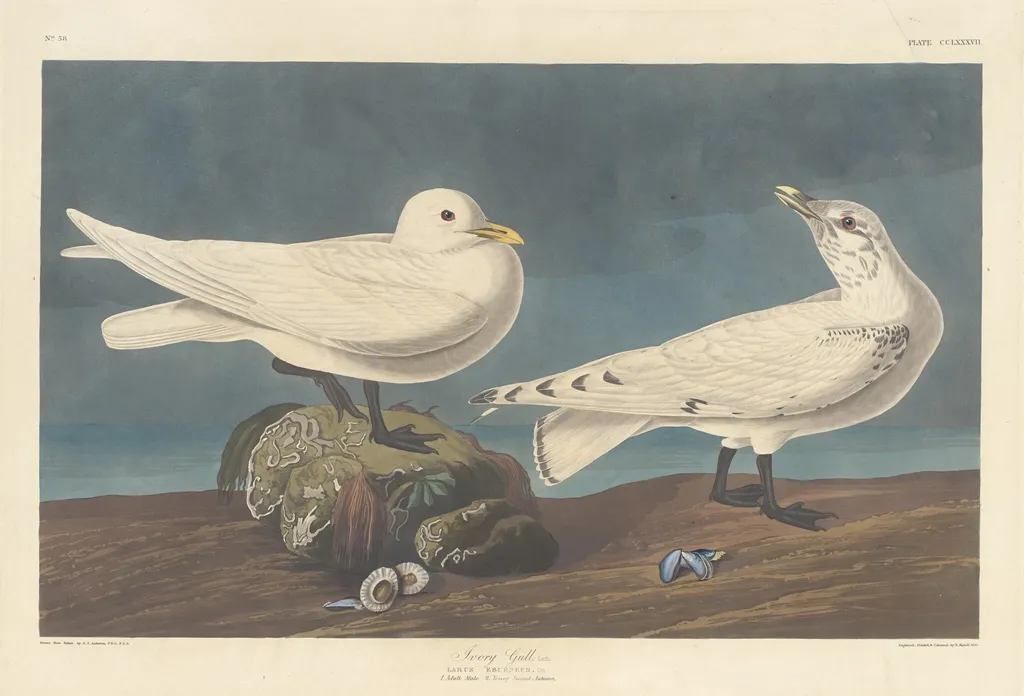
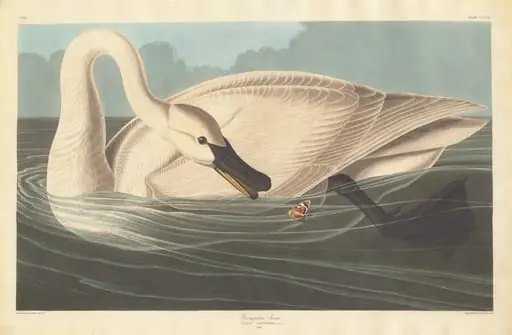
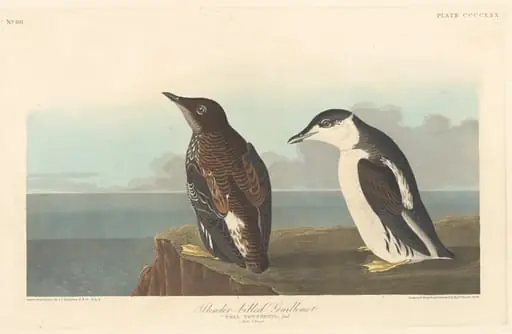
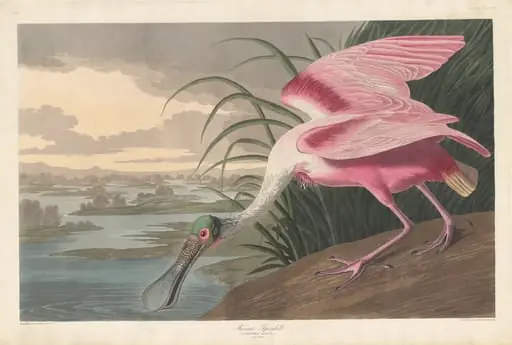
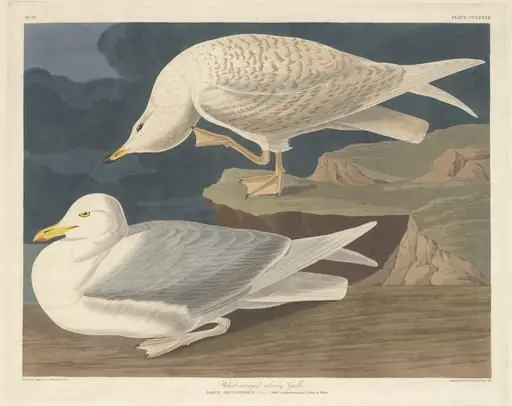
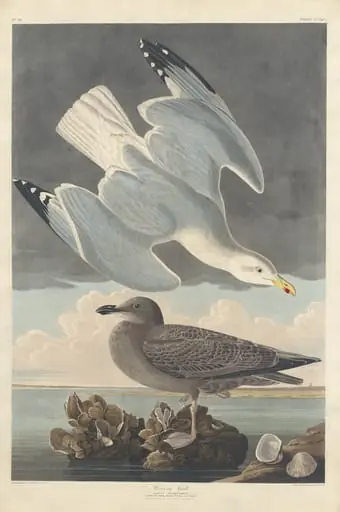
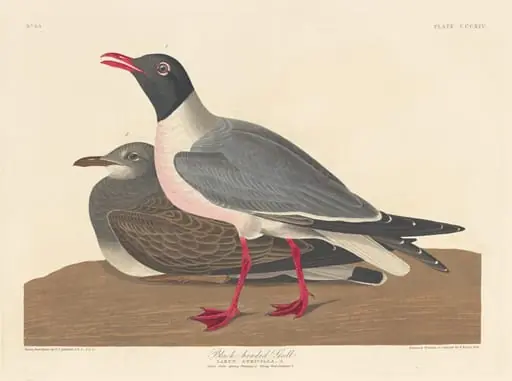
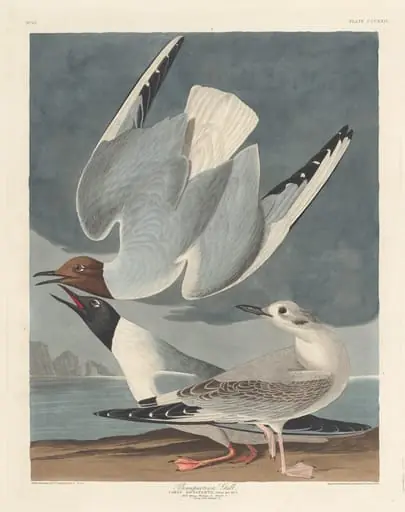
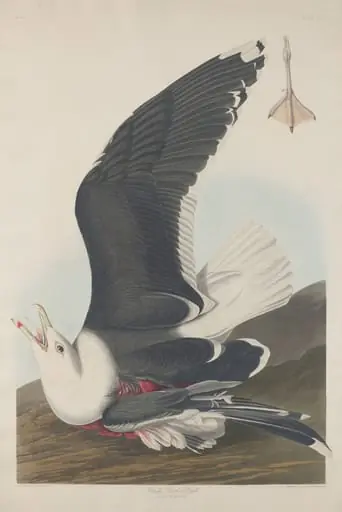
Ivory Gull is an ink print by the Romanticist artist Robert Havell Jr.. It dates from 1836 and is held in the collection of the National Gallery of Art.
About this work
Overview
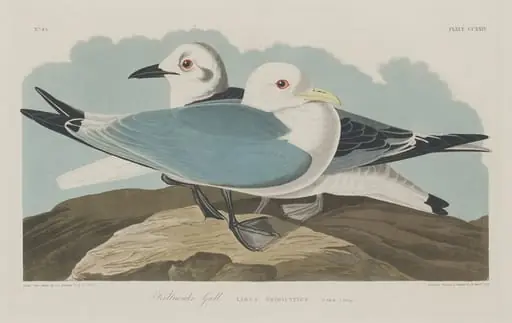
Created in 1836, this hand‑colored engraving and aquatint portrays an ivory gull perched on a rocky shoreline. Rendered on smooth Whatman wove paper, the image captures the bird with outstretched wings, a raised foot, and an open beak, set against a pale sky and a foreground scattered with shells and seaweed.
Technique & Style
The work combines fine line engraving with aquatint, a tonal printing method that the Havell family refined in the early nineteenth century. After the copper plate was etched, the artist applied watercolor washes to enhance the subtle gradations of the gull’s plumage, the yellow beak, and the atmospheric sky, achieving a delicate balance between line and tone.
Subject & Meaning
The ivory gull, a high‑latitude seabird, is depicted in a moment of poised readiness, suggesting both the fragility and resilience of Arctic wildlife. The composition’s emphasis on natural detail reflects contemporary scientific interest in documenting species, while the open beak may evoke the bird’s call across the stark coastal environment.
History & Provenance
Robert Havell Jr., a member of the prominent Havell family of engravers based in Reading, Berkshire, produced the print as part of the family’s broader engagement with natural history illustration and Indian artistic motifs. The piece remains an example of the Havells’ contribution to nineteenth‑century printmaking, illustrating their expertise in combining technical precision with decorative coloration.
Artist & collection

Artist
The Havell family of Reading, Berkshire, England, included a number of notable engravers, etchers and painters, as well as writers, publishers, educators, and musicians.