Artwork
Common Gull
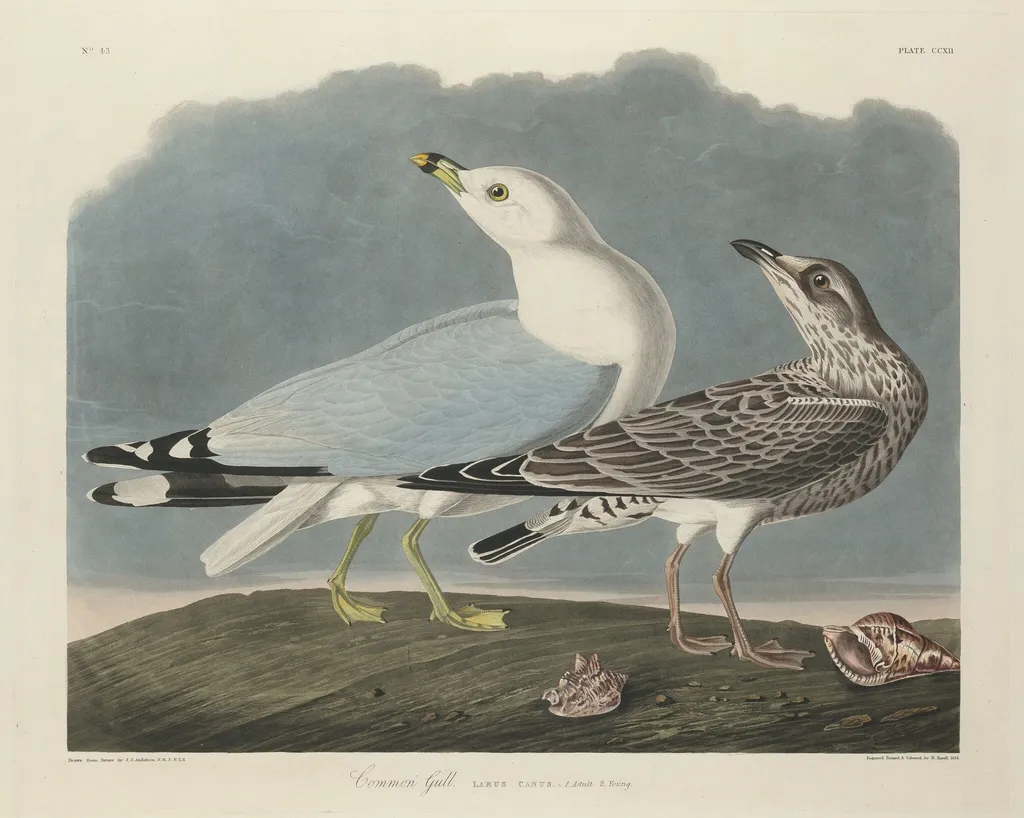
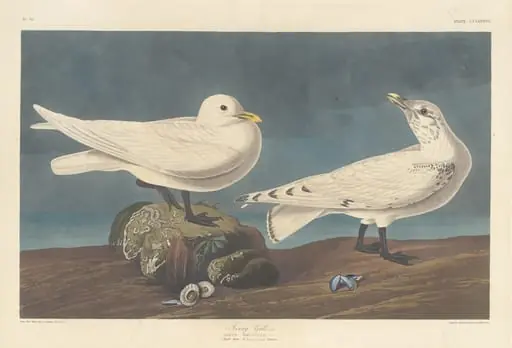
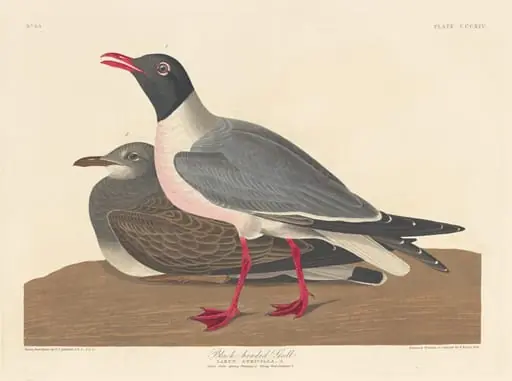
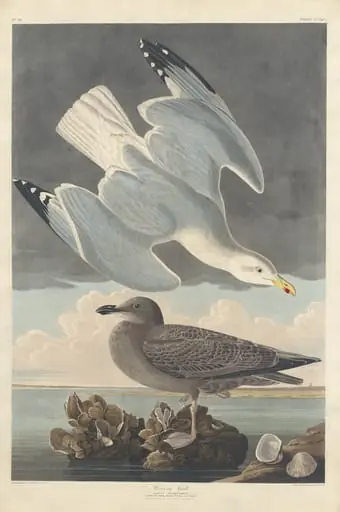
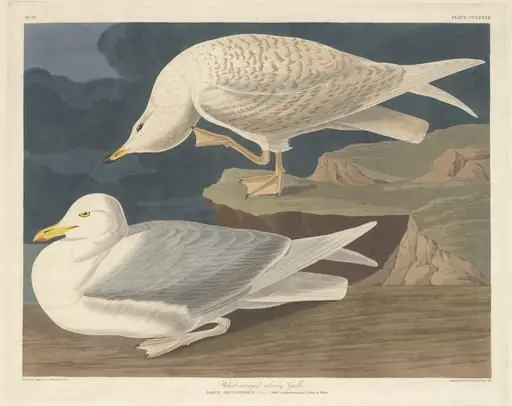
Common Gull is an ink print by the Romanticist artist Robert Havell Jr.. It dates from 1834 and is held in the collection of the National Gallery of Art.
About this work
Overview
It belongs to a series of ornithological illustrations produced during a period of heightened interest in natural history.
Created in 1834 by Robert Havell Jr., this print is a hand-colored engraving and aquatint on Whatman wove paper. It belongs to a series of ornithological illustrations produced during a period of heightened interest in natural history. The Havell family, based in Reading, Berkshire, were known for their technical precision in printmaking and their role in documenting wildlife through detailed visual records.
Subject & Meaning
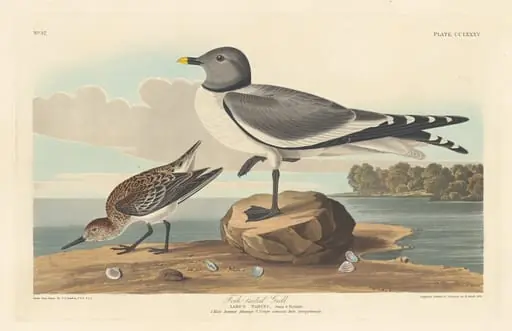
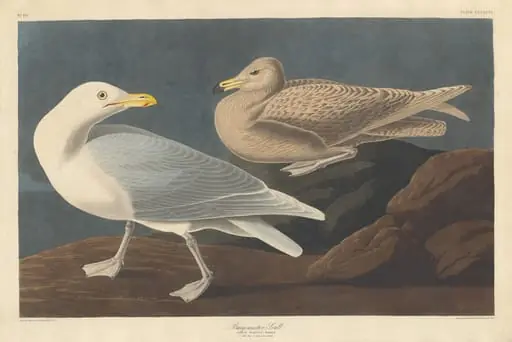
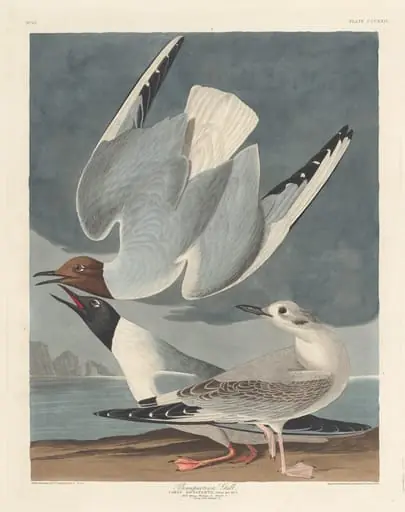
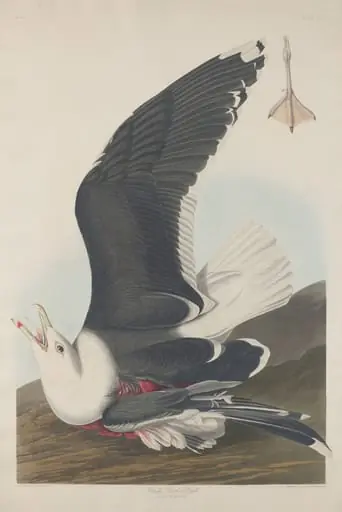
The image depicts two common gulls on a grassy slope, one with pale plumage and a yellow beak, the other mottled brown and gray. A small fish lies between them, with one bird shown in the act of feeding. The composition suggests a quiet moment in the birds’ natural behavior, emphasizing observation over drama. The scene reflects a scientific interest in avian life, grounded in accurate depiction rather than idealization.
Technique & Style
Havell employed engraving and aquatint to achieve fine detail and tonal variation. The feathers are rendered with delicate lines, while the soft, cloudy background was likely achieved through aquatint’s wash-like effects. Hand-coloring added naturalistic hues without obscuring the underlying etched structure. The use of Whatman paper, known for its durability and smooth surface, supported the precision required for such intricate work.
History & Provenance
Robert Havell Jr. was part of a multi-generational family of printmakers active in England during the early 19th century. While the Havells are often associated with American natural history projects, this work stems from their broader engagement with British ornithology. The print was likely produced for private collectors or scientific publications, reflecting the era’s demand for accurate wildlife imagery.
Context
In the 1830s, natural history illustration flourished alongside expanding scientific inquiry and colonial exploration. Artists like Havell contributed to a growing body of visual documentation that supported both academic study and public fascination with the natural world. This print aligns with contemporaneous efforts to classify and depict species with fidelity, often in response to new biological discoveries.
Legacy
Havell’s work represents a bridge between artistic craftsmanship and scientific record-keeping. Though not widely exhibited today, his prints remain valued for their technical skill and historical insight into 19th-century naturalism. The attention to anatomical detail and environmental context set a standard for later ornithological illustration, influencing how wildlife was visually understood in print.
Artist & collection

Artist
The Havell family of Reading, Berkshire, England, included a number of notable engravers, etchers and painters, as well as writers, publishers, educators, and musicians.