Artwork
Common Buzzard
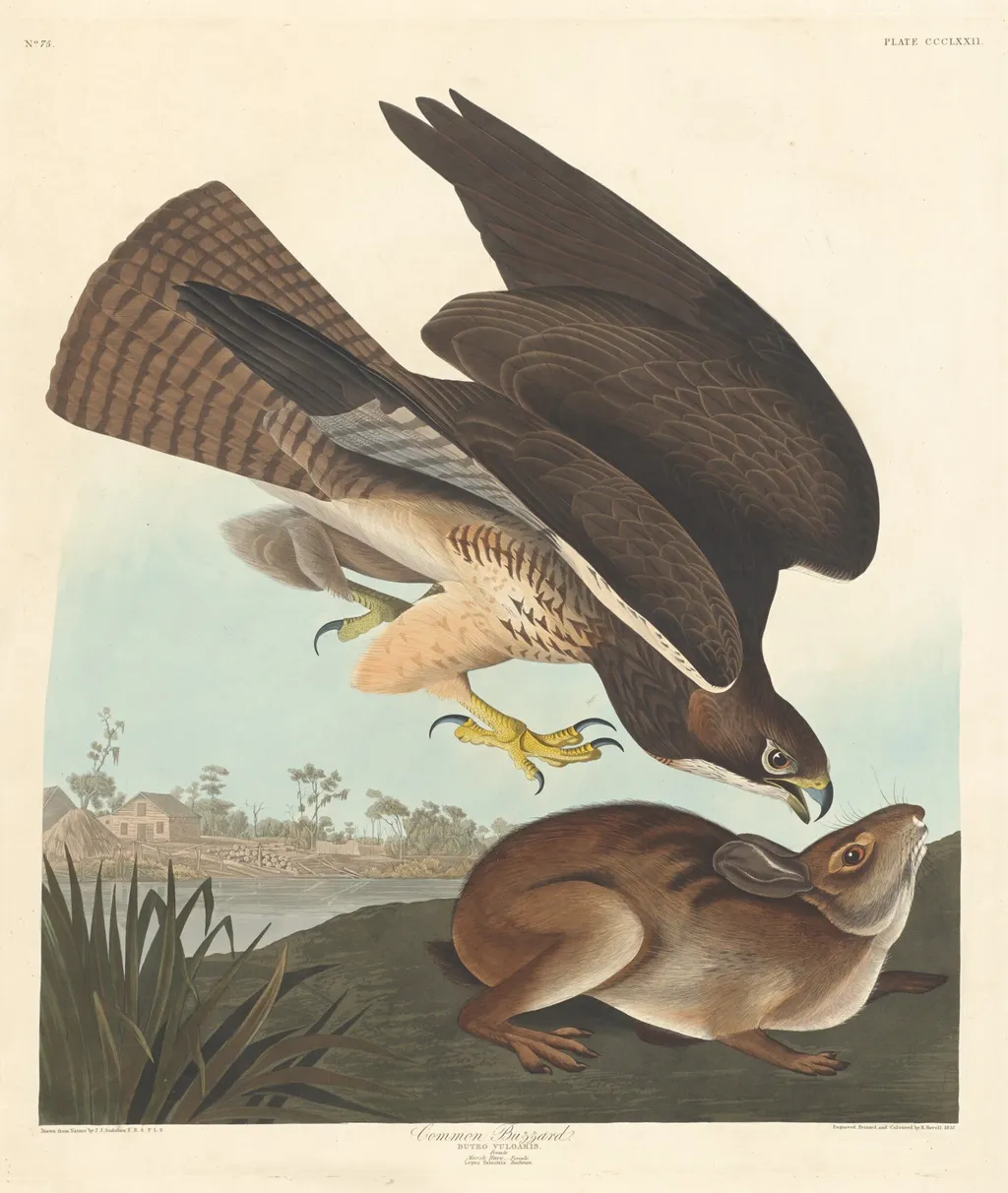
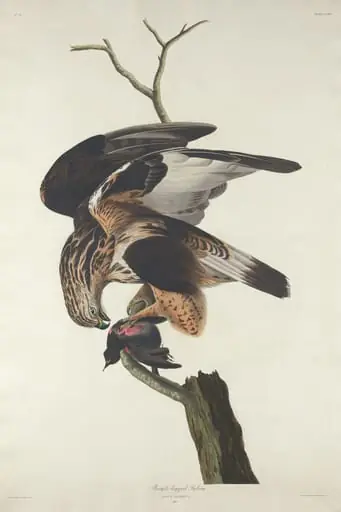
Common Buzzard is an ink print by the Romanticist artist Robert Havell Jr.. It dates from 1837 and is held in the collection of the National Gallery of Art.
About this work
Overview
Common Buzzard (1837) is a hand-colored engraving and aquatint print on Whatman wove paper, created by Robert Havell Jr. in England. This work exemplifies the Havell family’s technical prowess in aquatint and their interest in Indian art and culture, alongside their broader contributions to engraving, etching, and painting.
Subject & Meaning
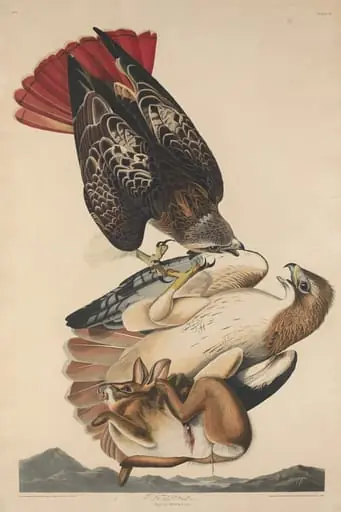
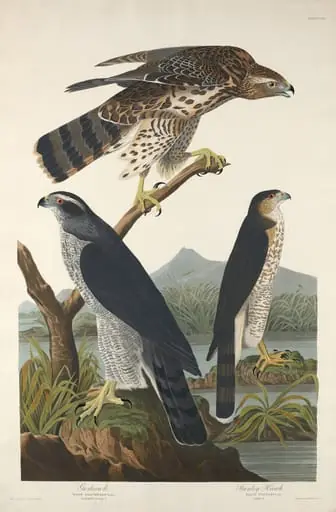
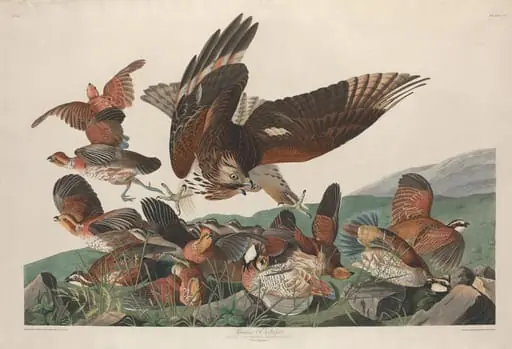
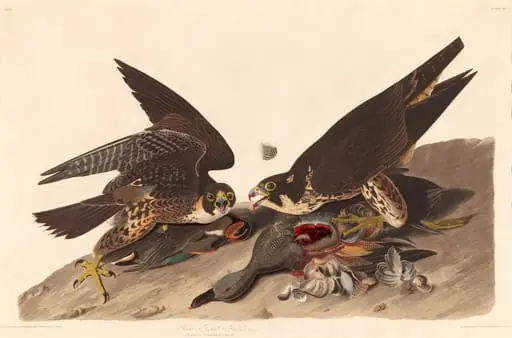
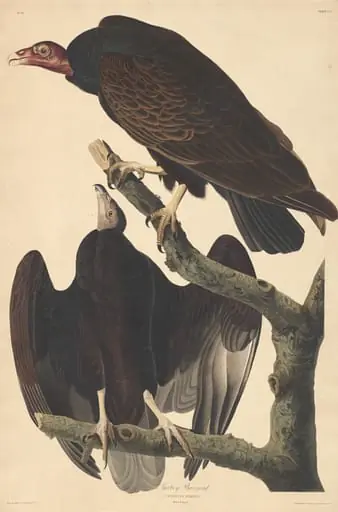
Contrary to its title, the print actually depicts a dramatic scene of a bird of prey (likely a hawk or falcon) attacking a rabbit, set against a serene landscape. The image captures a moment of high tension, juxtaposing the predator’s aggressive posture with the prey’s fearful reaction.
Technique & Style
The print showcases the Havell family’s renowned aquatint expertise, combined with hand coloring. The naturalistic style aligns with period conventions for scientific and ornithological illustrations, yet the dynamic composition and bold colors introduce a sense of energy and drama uncommon in purely scientific works.
History & Provenance
Robert Havell Jr. was part of a distinguished family of artists from Reading, Berkshire, recognized for their multifaceted artistic and intellectual achievements. The specific provenance of *Common Buzzard* is not detailed here, but its creation reflects the family’s established practice of producing high-quality engravings and aquatints.
Context
Produced in 19th-century England, *Common Buzzard* sits at the intersection of scientific illustration and artistic expression. While reflecting the era’s natural history documentation trends, the piece’s emphasis on dynamic action distinguishes it from more static, taxonomic illustrations prevalent at the time.
Legacy
The legacy of *Common Buzzard* lies primarily in its representation of the Havell family’s technical skill in aquatint and their blend of scientific accuracy with artistic flair. Its impact on broader artistic movements is less defined, though it contributes to the historical record of ornithological art in the Victorian era.
Artist & collection

Artist
The Havell family of Reading, Berkshire, England, included a number of notable engravers, etchers and painters, as well as writers, publishers, educators, and musicians.