Artwork
Tell-tale Godwit
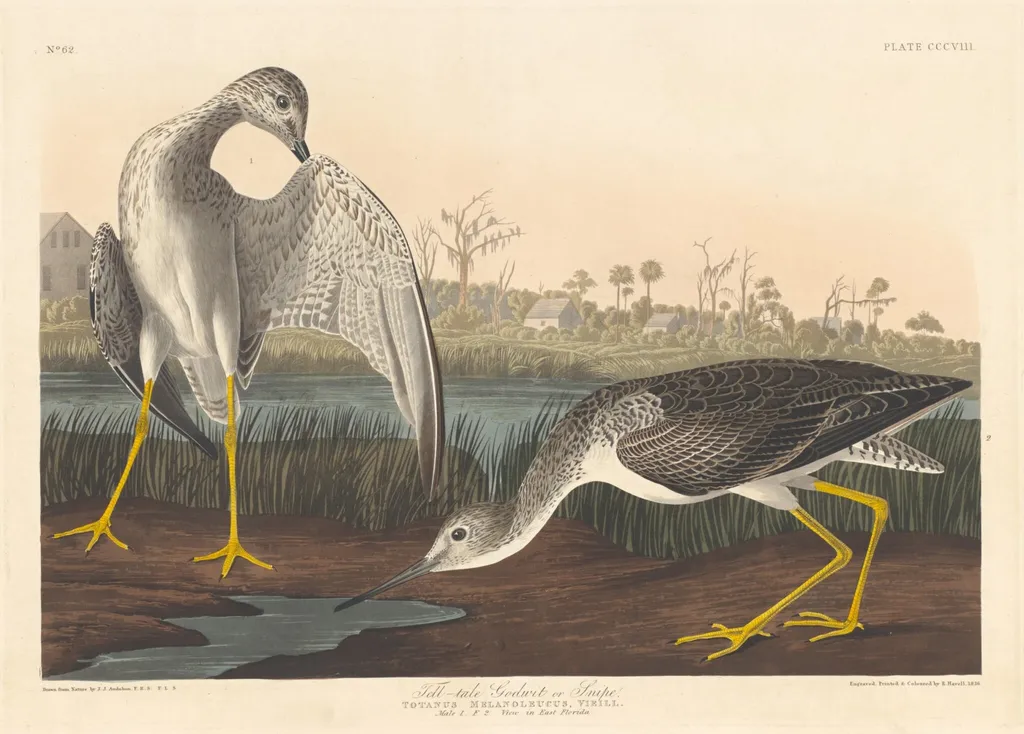
Tell-tale Godwit is an ink print by the Romanticist artist Robert Havell Jr.. It dates from 1836 and is held in the collection of the National Gallery of Art.
About this work
Overview
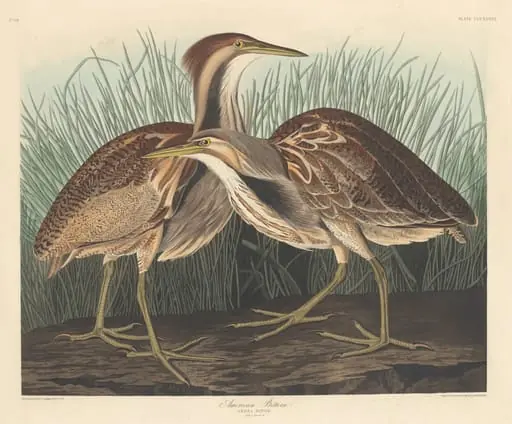
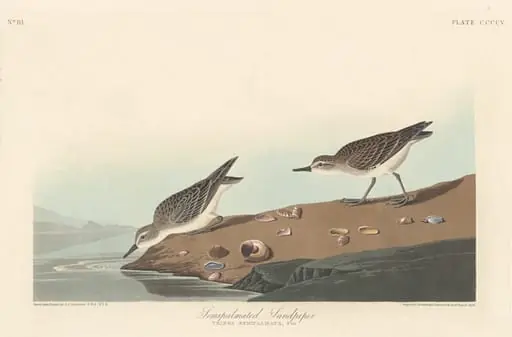
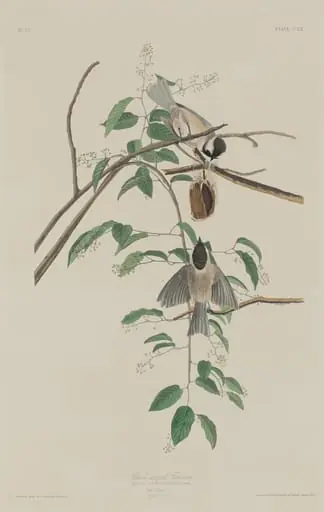
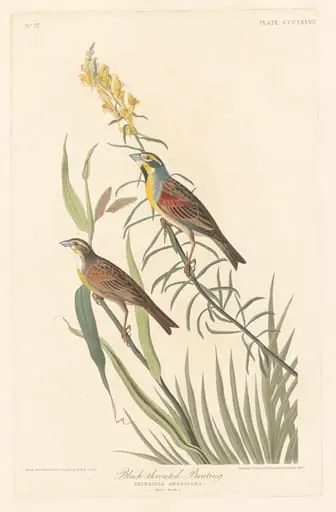
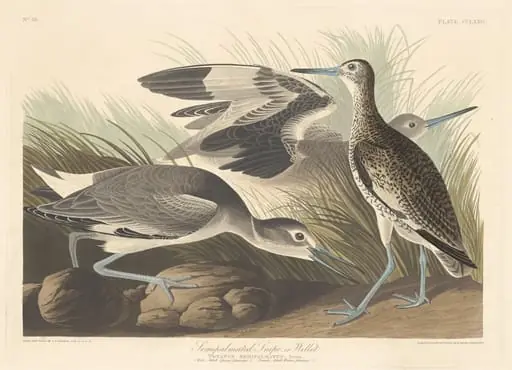
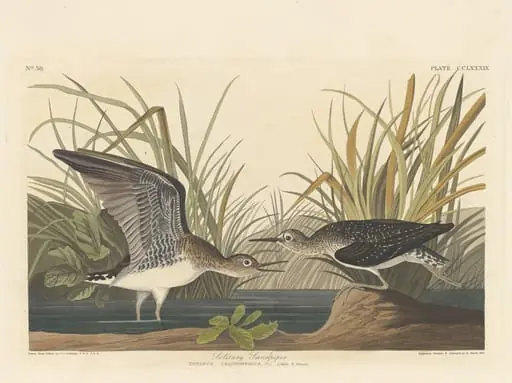
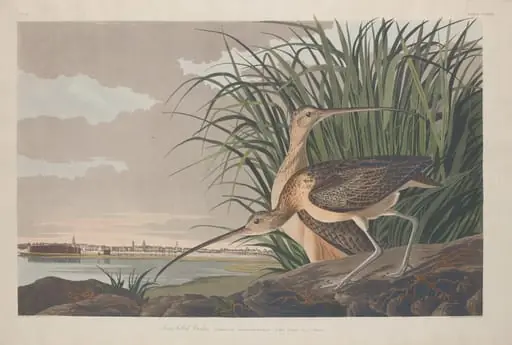
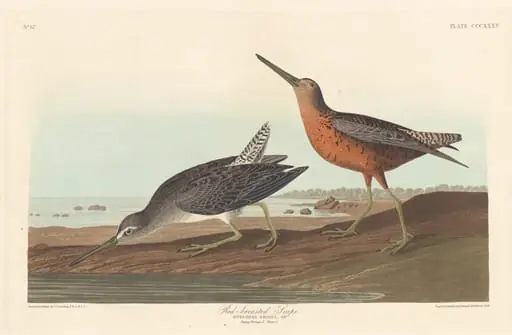
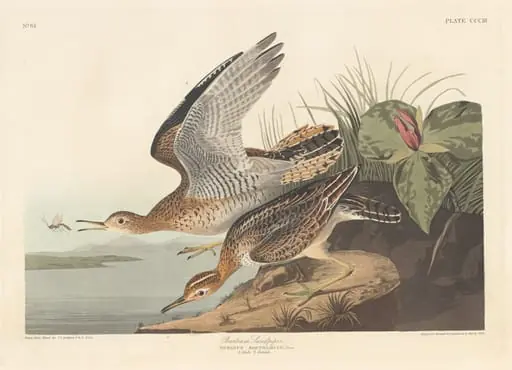
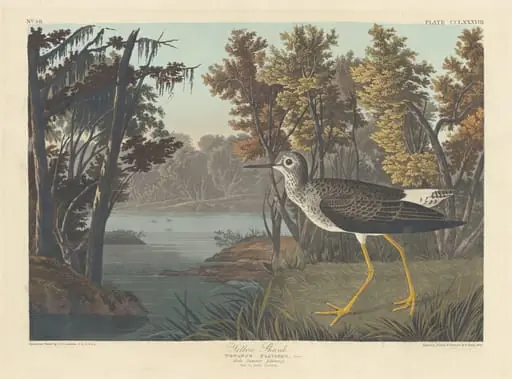
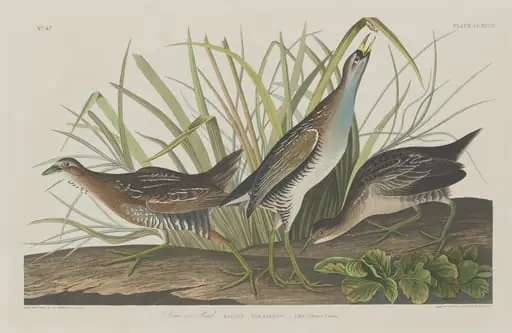
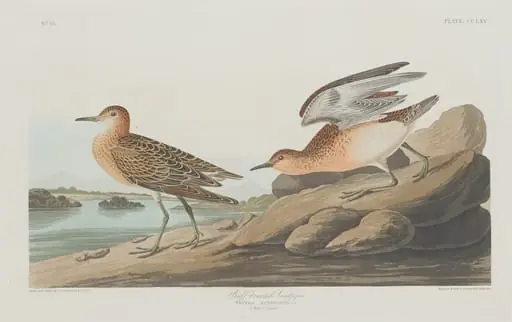
Robert Havell Jr.’s 1836 print titled *Tell‑tale Godwit* combines hand‑coloring with engraving and aquatint on a sheet of Whatman wove paper. The image depicts a godwit in a natural setting, rendered with careful attention to the bird’s plumage and surroundings, illustrating the species’ typical behavior.
Technique & Style
The work employs aquatint, a tonal printmaking method the Havell family mastered, allowing subtle gradations of shade. Engraving provides the line work, while hand‑applied color enhances the details of feathers and habitat. The choice of high‑quality Whatman wove paper supports fine rendering of texture and tone.
Subject & Meaning
The print focuses on the godwit, a migratory wader, presented in a realistic pose that suggests observation of its natural habits. By emphasizing feather structure and environmental context, the image serves both as a visual study of the bird and as an illustration for ornithological interest.
History & Provenance
Created in Reading, Berkshire, the piece reflects the Havell family’s long involvement with natural history illustration and their connections to Indian artistic circles. The print belongs to the early‑19th‑century British tradition of scientific illustration that catered to a growing public fascination with wildlife.
Context
During the 1830s, British artists increasingly produced detailed prints for naturalists and collectors. *Tell‑tale Godwit* aligns with this movement, offering a precise visual record that complemented contemporary ornithological studies and publications.
Artist & collection

Artist
The Havell family of Reading, Berkshire, England, included a number of notable engravers, etchers and painters, as well as writers, publishers, educators, and musicians.