Artwork
Wilson's Phalarope
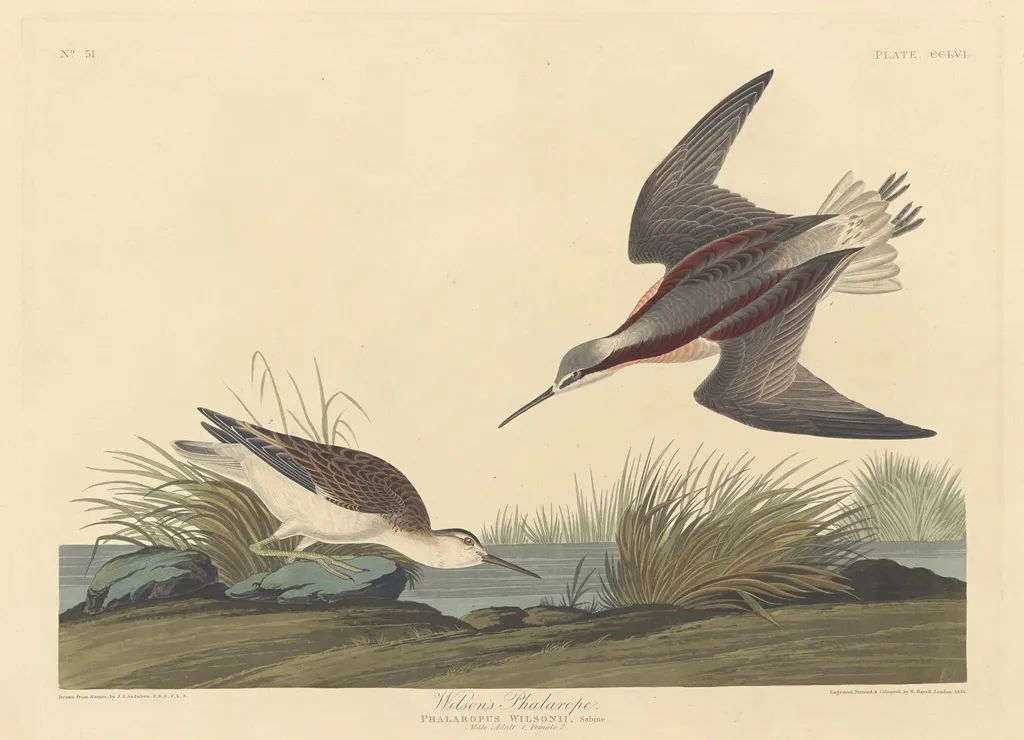
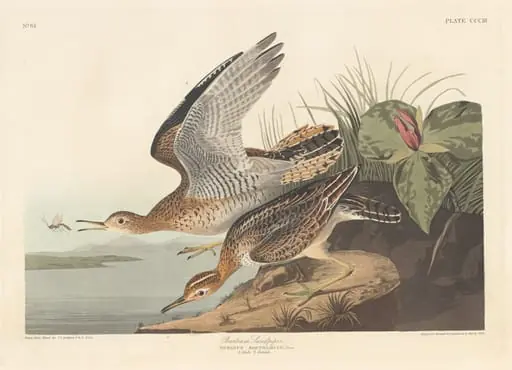
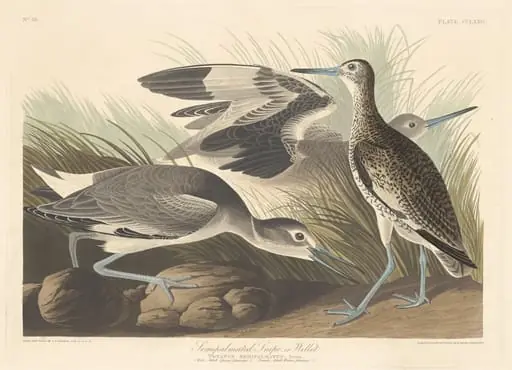
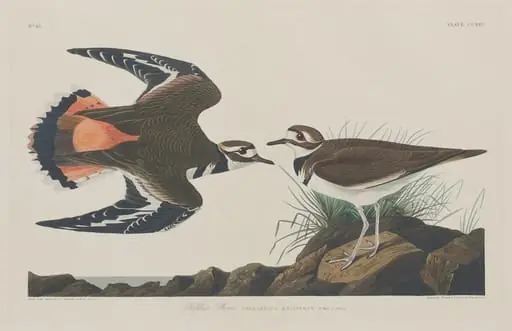
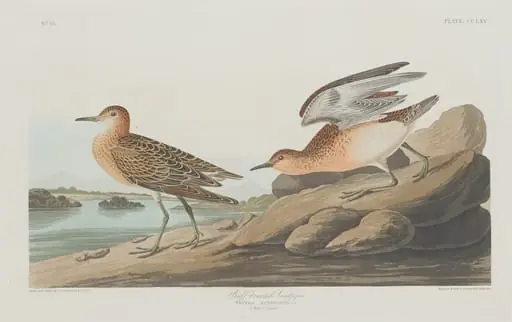
Wilson's Phalarope is an ink print by the Romanticist artist Robert Havell Jr.. It dates from 1835 and is held in the collection of the National Gallery of Art.
About this work
Overview
Wilson's Phalarope is a hand-colored engraving and aquatint on Whatman wove paper, created using a combination of printmaking techniques.
Subject & Meaning
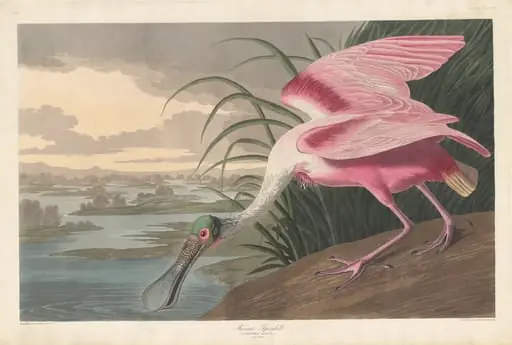
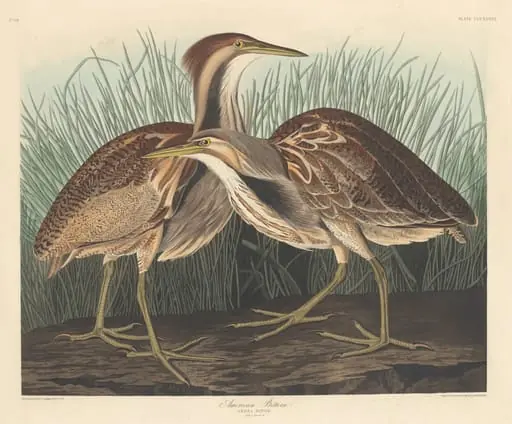
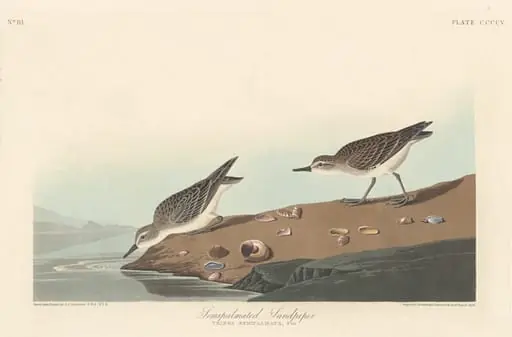
The print depicts two phalaropes, a type of wading bird, in a natural setting with grasses, plants, and water. The birds are shown in different plumage, with one appearing more subdued in color and the other displaying a mix of gray, brown, and white feathers.
Technique & Style
The work showcases the Havell family's expertise in aquatint, with delicate color and composition that creates a sense of depth and movement. The use of hand-coloring adds detail and nuance to the ornithological study.
History & Provenance
The print was produced by Robert Havell Jr. in 1835, a member of a family of engravers and publishers known for their work in aquatint and their connection to Indian art and culture.
Artist & collection

Artist
The Havell family of Reading, Berkshire, England, included a number of notable engravers, etchers and painters, as well as writers, publishers, educators, and musicians.