Artwork
Zenaida Dove
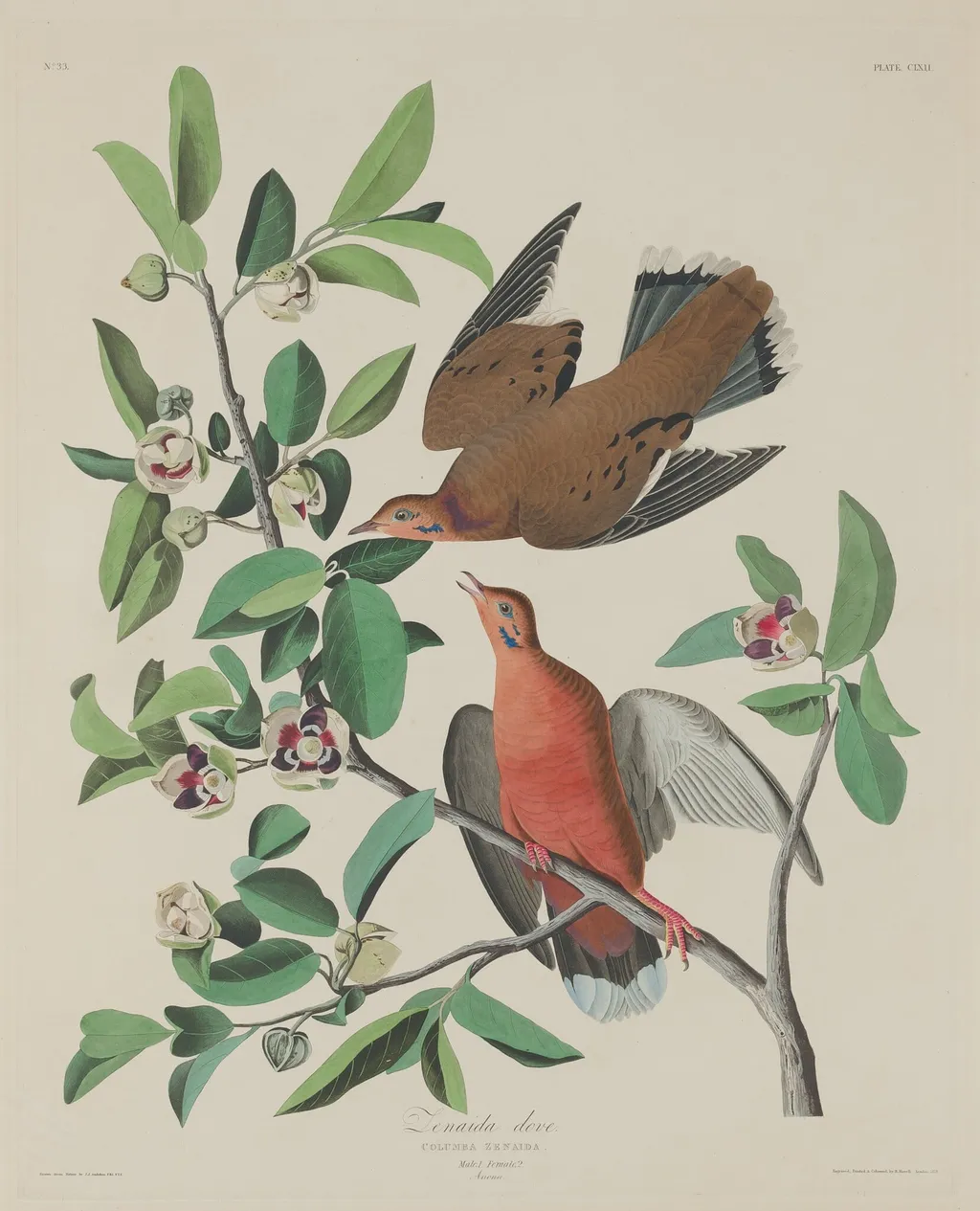
Zenaida Dove is an ink print by the Romanticist artist Robert Havell Jr.. It dates from 1833 and is held in the collection of the National Gallery of Art.
About this work
Overview
It belongs to a series of avian studies produced during a period when natural history illustration was gaining scholarly attention.
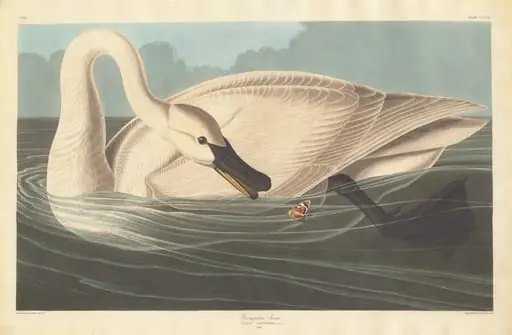
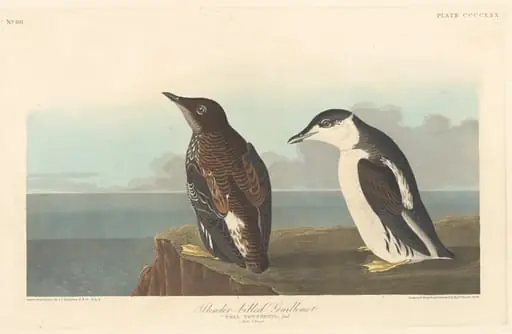
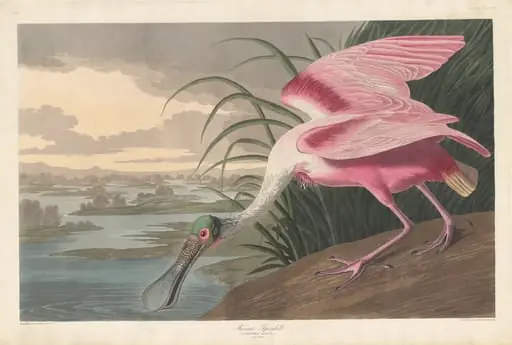
Created in 1833 by Robert Havell Jr., this print combines hand-colored engraving and aquatint on Whatman wove paper. It belongs to a series of avian studies produced during a period when natural history illustration was gaining scholarly attention. The Havell family, long associated with precision printmaking, brought technical rigor to their depictions of wildlife, blending scientific accuracy with aesthetic care.
Subject & Meaning
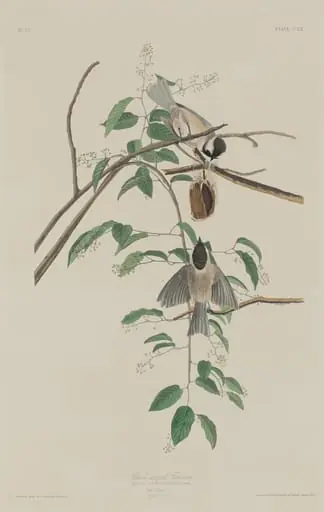
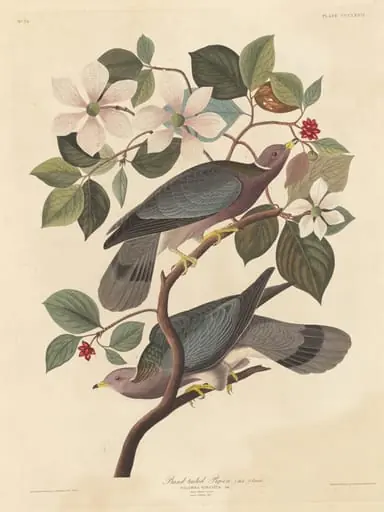
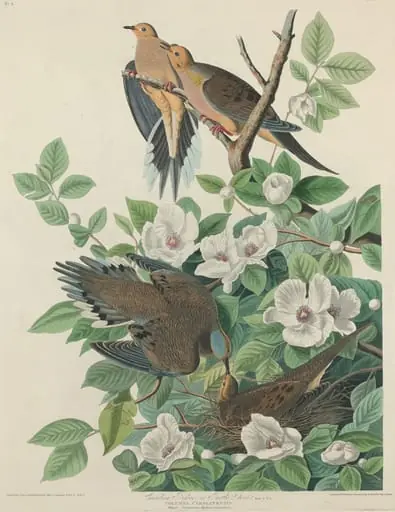
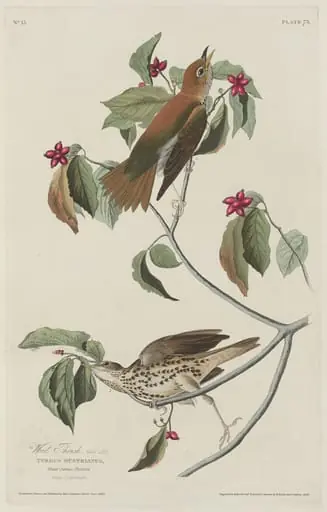
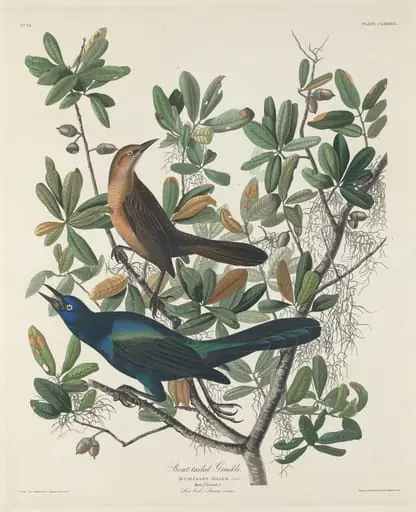
The composition features two Zenaida doves—one perched on a branch, the other in mid-flight—surrounded by delicate foliage and blossoms. The birds are rendered with anatomical precision, reflecting an interest in ornithological documentation. The quiet, intimate scene suggests observation rather than narrative, emphasizing the bird’s natural behavior and environment without anthropomorphism.
Technique & Style
Havell employed fine-line engraving and aquatint to capture the texture of feathers and leaves. Cross-hatching defines the gradations of gray and white plumage, while hand-coloring adds subtle hues to the red and green elements. The plain background isolates the subjects, heightening focus on their form and the delicate rendering of botanical details, characteristic of the Havell workshop’s methodical approach.
History & Provenance
The print was produced as part of a broader project documenting North American birds, likely linked to John James Audubon’s ornithological publications. Robert Havell Jr. was the principal engraver for Audubon’s *Birds of America*, and this work reflects the same standards of craftsmanship. The use of Whatman paper, prized for its durability and absorbency, underscores the print’s intended longevity and scholarly value.
Context
In the early 19th century, natural history illustration merged scientific inquiry with artistic tradition. European and American publishers commissioned detailed prints to support emerging fields like ornithology. Havell’s work, though not widely exhibited, contributed to a growing visual archive of species, aligning with contemporary efforts to classify and preserve knowledge of the natural world through print.
Legacy
Though less known than Audubon’s larger folios, Havell’s individual prints like this one exemplify the quiet precision of 19th-century naturalist printmaking. Their influence endures in the continued appreciation for hand-colored engravings as both scientific records and refined artworks, valued for their technical discipline and restrained beauty.
Artist & collection

Artist
The Havell family of Reading, Berkshire, England, included a number of notable engravers, etchers and painters, as well as writers, publishers, educators, and musicians.