Artwork
Elijah is Taken up to Heaven
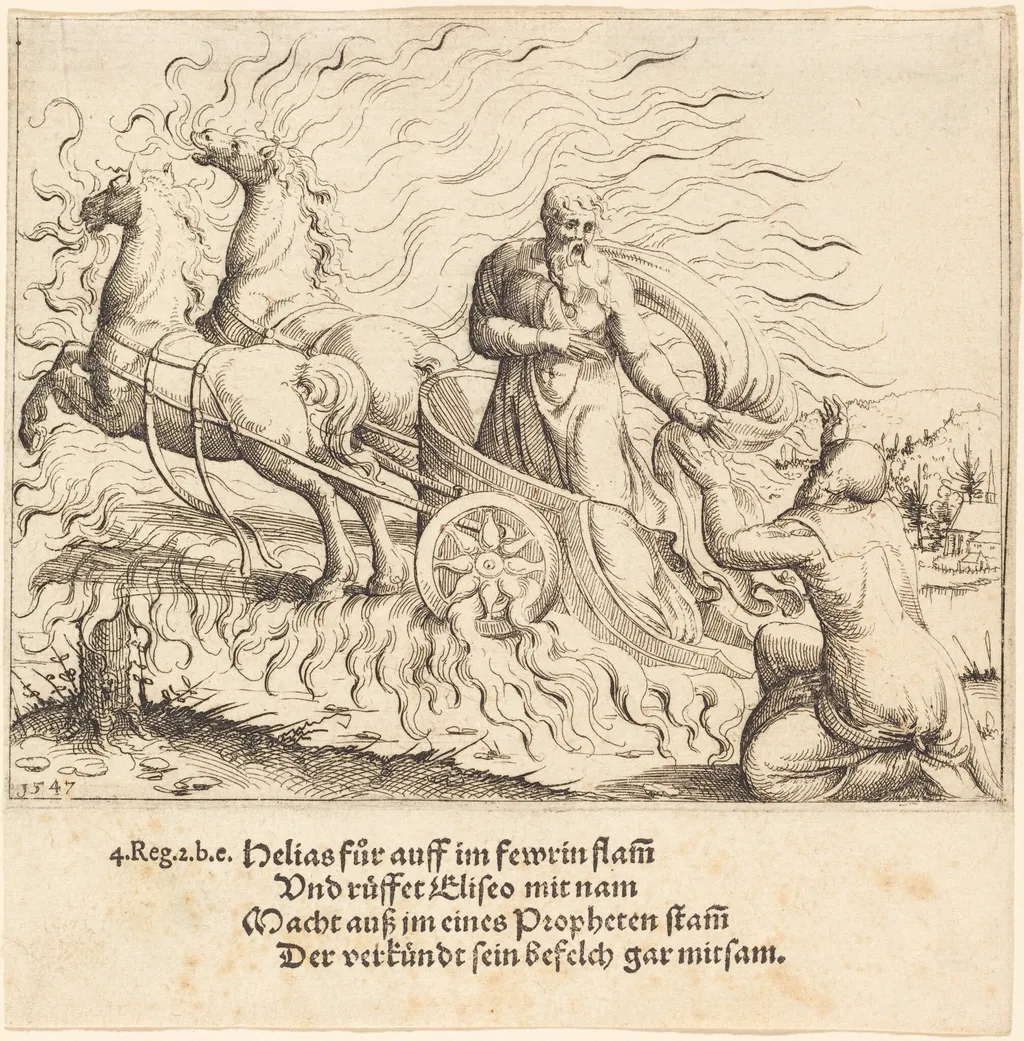
Elijah is Taken up to Heaven is an ink print by the Renaissance artist Augustin Hirschvogel. It dates from 1547 and is held in the collection of the National Gallery of Art. Created in 1547, this black‑and‑white etching depicts the biblical episode of Elijah’s ascent to heaven.
About this work
Overview
Created in 1547, this black‑and‑white etching depicts the biblical episode of Elijah’s ascent to heaven. A robed figure ascends in a fiery chariot drawn by two horses, surrounded by swirling flames, while a small boat with two onlookers drifts below. The composition balances dramatic motion with a measured, almost schematic arrangement, characteristic of mid‑sixteenth‑century printmaking.
Subject & Meaning
The scene illustrates the Old Testament narrative in which the prophet Elijah is taken up to heaven in a whirlwind of fire, a moment traditionally interpreted as divine vindication. The presence of the distant boat and its occupants serves as a narrative device, inviting the viewer to witness the miraculous event from a human perspective.
Technique & Style
Executed by etching, the artist incised fine, decisive lines into a copper plate, producing sharp contrasts of light and shadow. The rendering of flame and movement relies on densely cross‑hatched areas, while the landscape elements are rendered with a restrained, linear clarity. This approach reflects the precise, almost scientific handling of line associated with Hirschvogel’s broader oeuvre.
History & Provenance
The work belongs to a series of thirty‑five small landscape prints produced by Augustin Hirschvogel between 1545 and 1549. Hirschvogel, a German mathematician and cartographer, was linked to the Danube School, a regional group active in Bavaria and Austria. The print has survived in several impressions, most of which entered European collections during the late‑16th and early‑17th centuries.
Context
During the mid‑1500s, Northern European artists increasingly combined religious subjects with detailed natural settings, a hallmark of the Danube School. Hirschvogel’s background in geometry and mapmaking informed his precise spatial organization, while his interest in atmospheric effects aligns him with contemporaries such as Albrecht Altdorfer, who also merged narrative and landscape.
Artist & collection
Artist
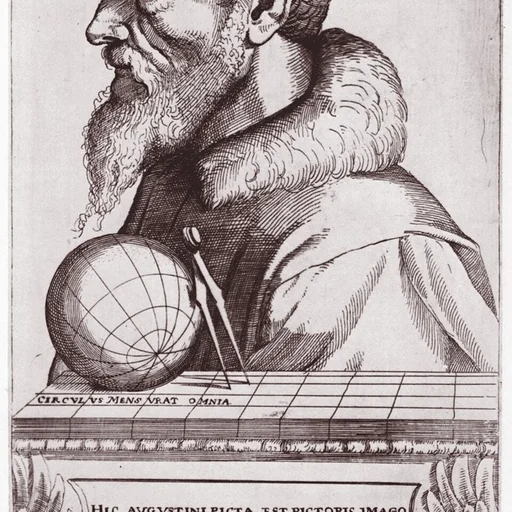
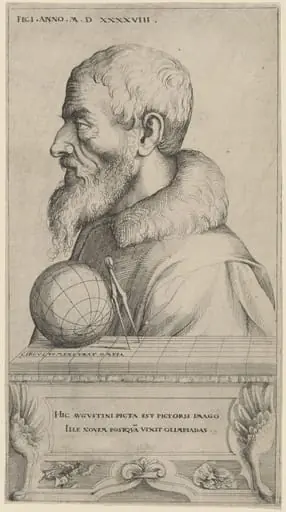
Augustin Hirschvogel (1503 – February 1553) was a German artist, mathematician, and cartographer known primarily for his etchings.

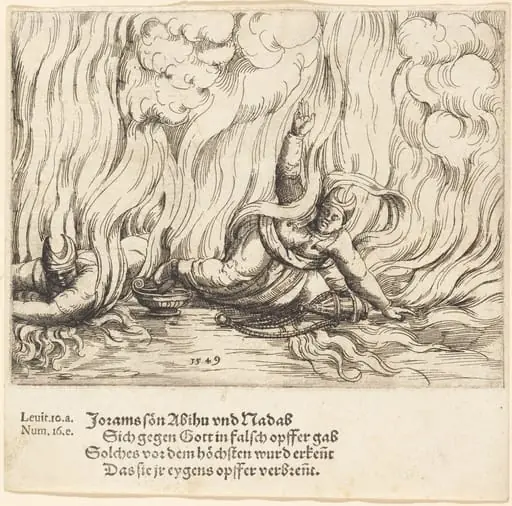 Nadab and Abihu
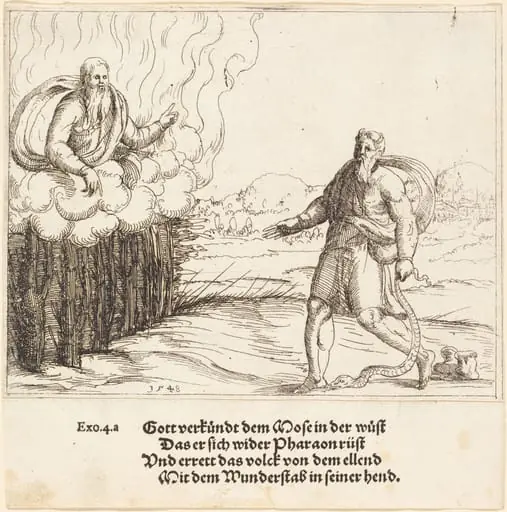 Moses and the Serpent
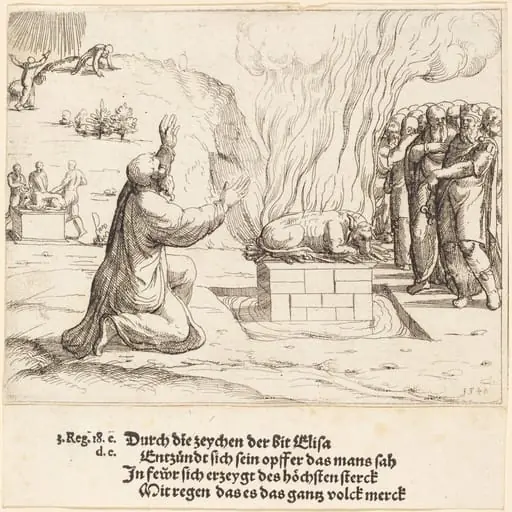 The Rival Sacrifices of Elijah and the Priests of Baal
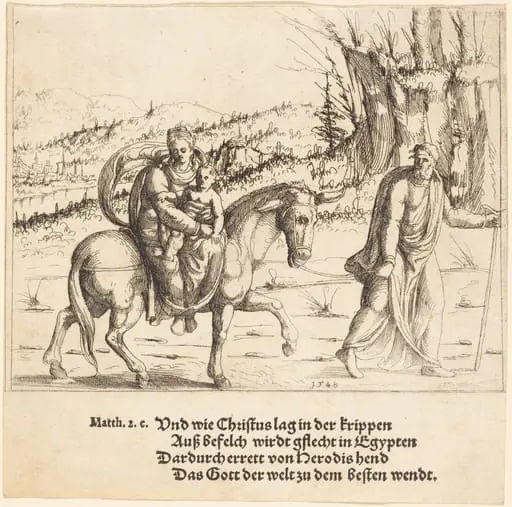 The Flight into Egypt
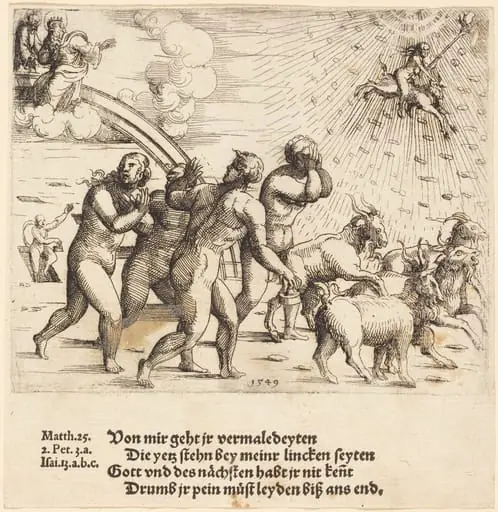 The Last Judgment
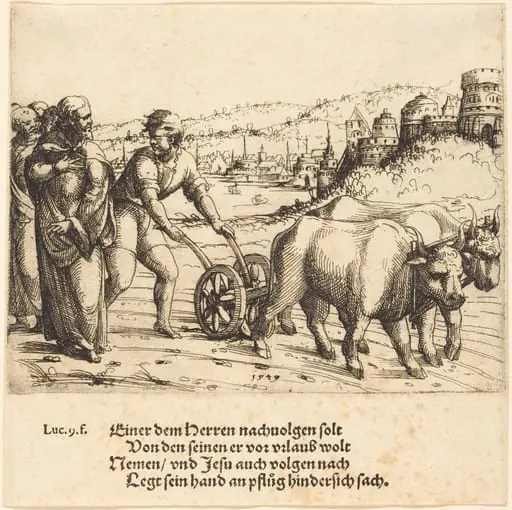 No One Who Puts His Hand on the Plow and Looks Back ia a Follower of Christ
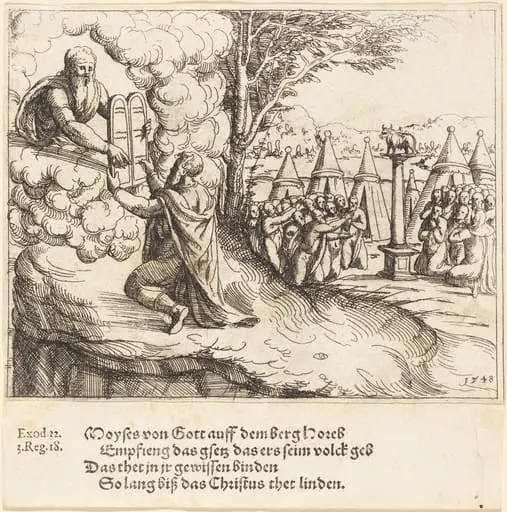 Moses Receiving the Tablets
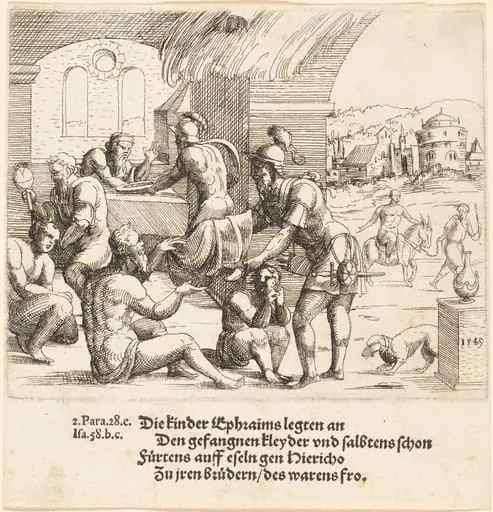 The Men of Ephraim Care for their Captives and Return Them to Jerico
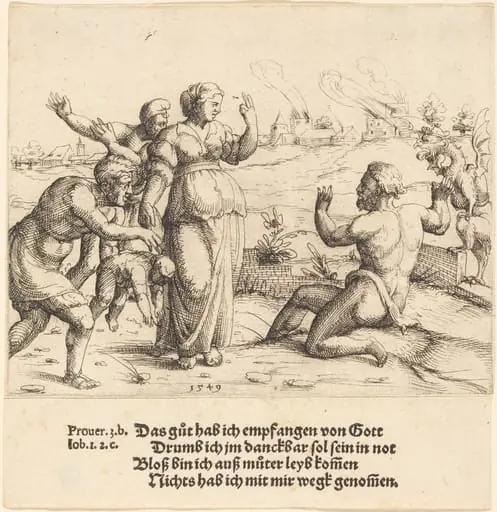 Job Learns of His Misfortunes