Artwork
The Annunciation
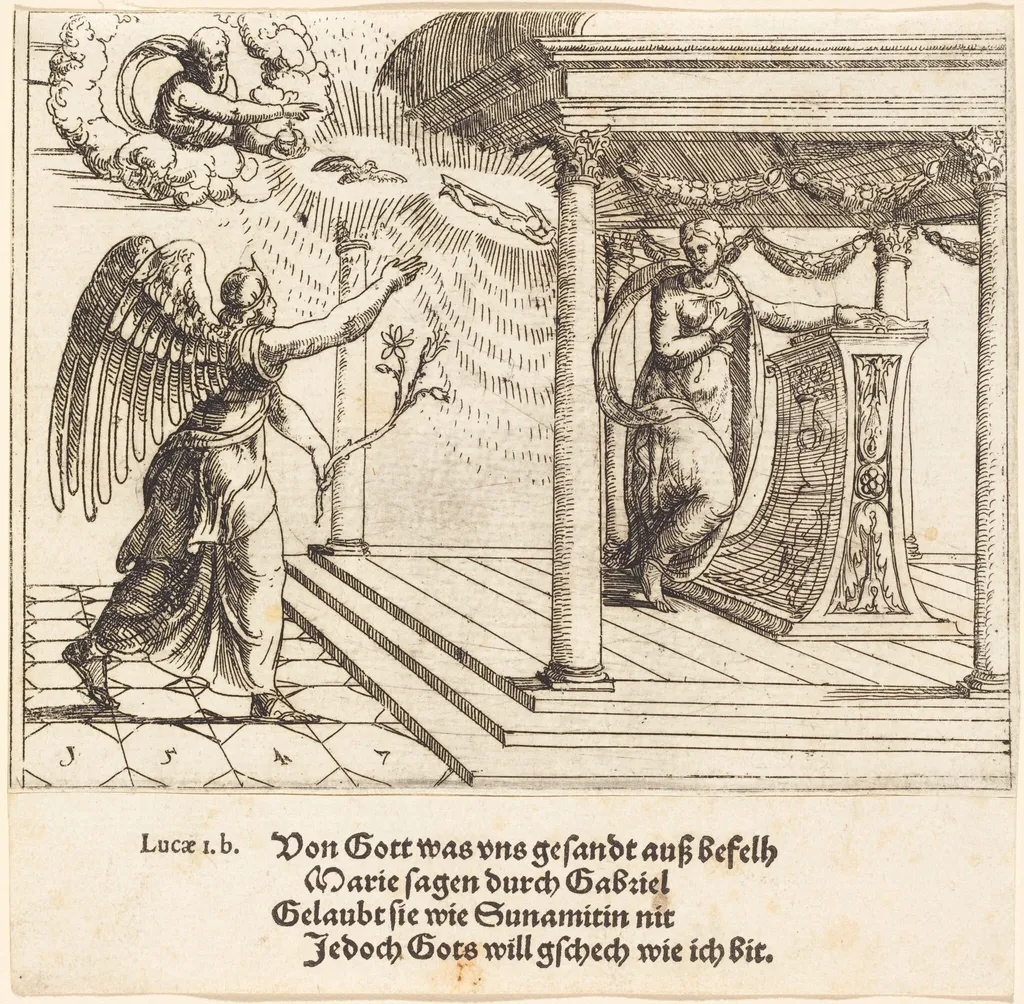
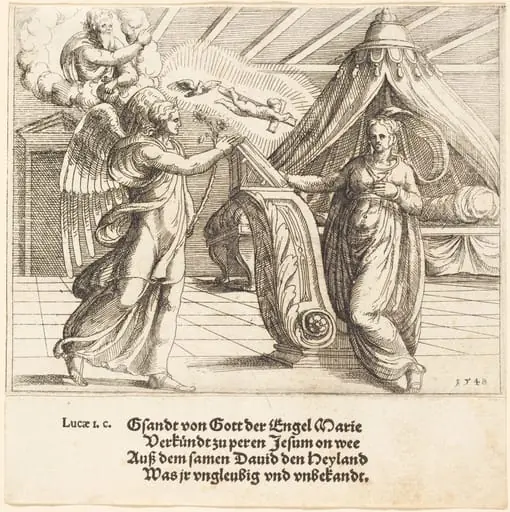
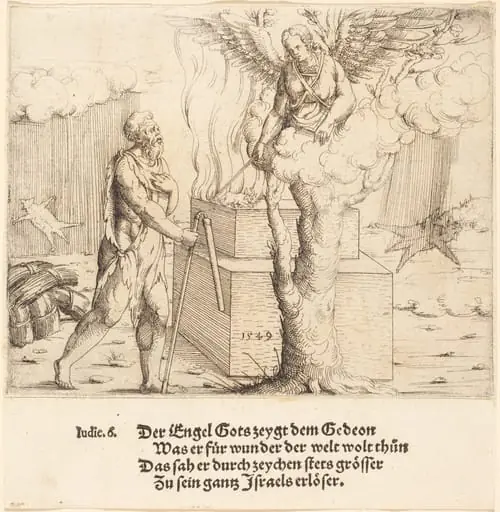
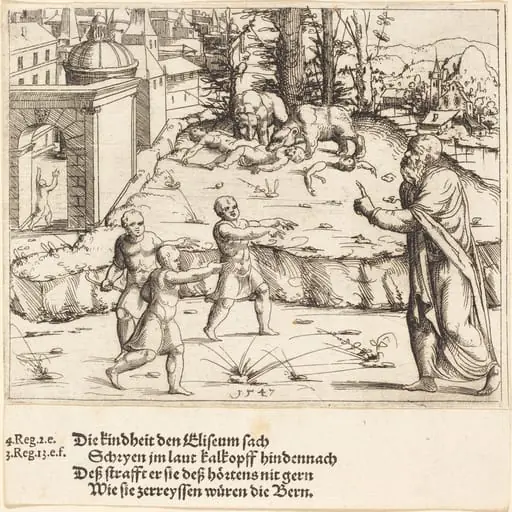
The Annunciation is an ink print by the Renaissance artist Augustin Hirschvogel. It dates from 1547 and is held in the collection of the National Gallery of Art.
About this work
Overview
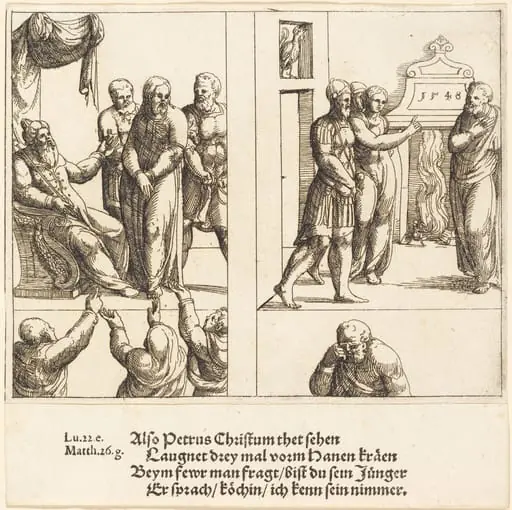
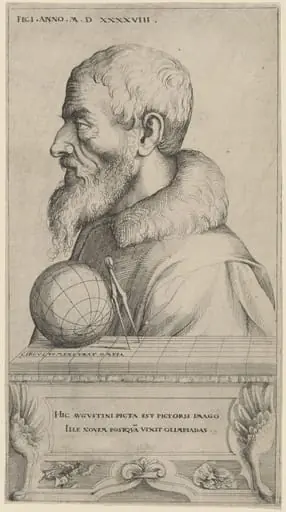
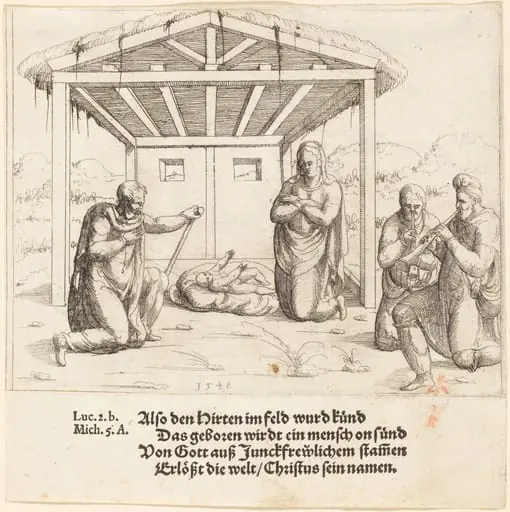
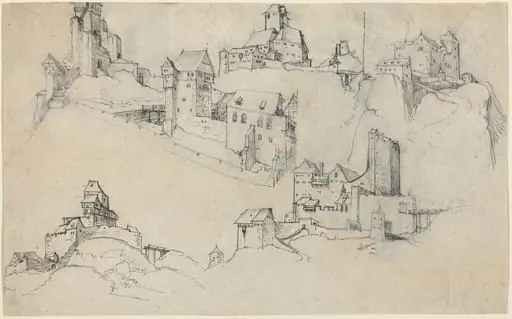
The Annunciation is a 1547 etching by Augustin Hirschvogel, a German artist of the Danube School, known for his contributions to etching, mathematics, and cartography.
Subject & Meaning
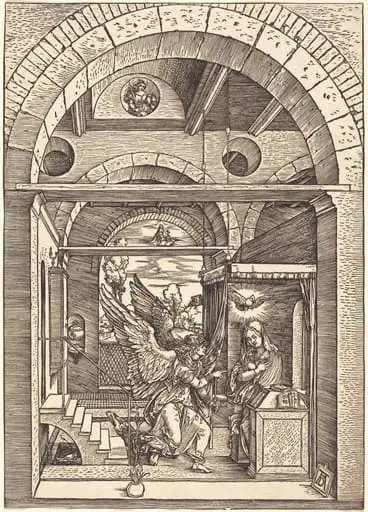
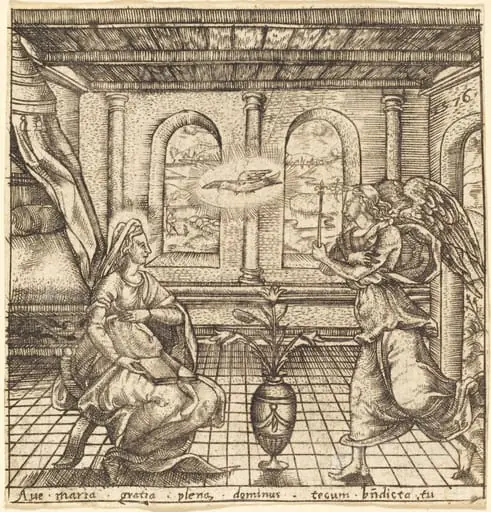
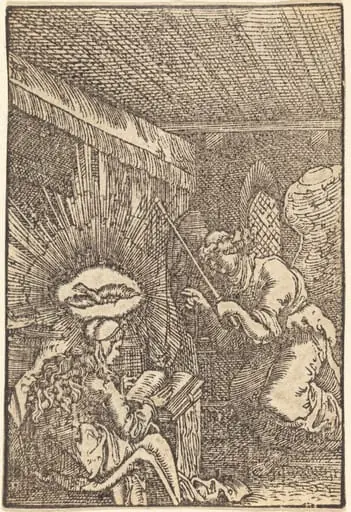
Depicting a pivotal religious moment, the print shows the Angel Gabriel announcing to the Virgin Mary her impending motherhood, conveyed through subtle gestures and symbolic elements like the staff, flower, and divine light.
Technique & Style
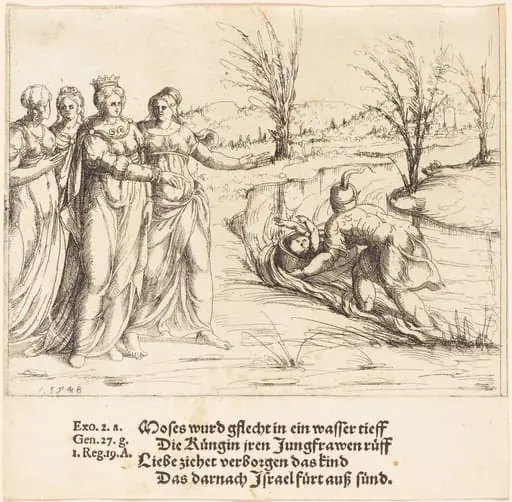
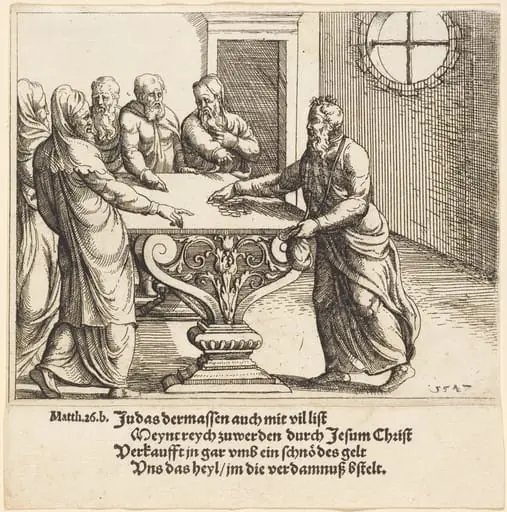
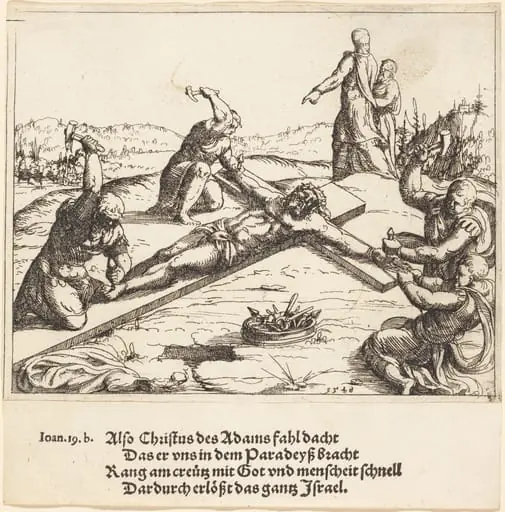
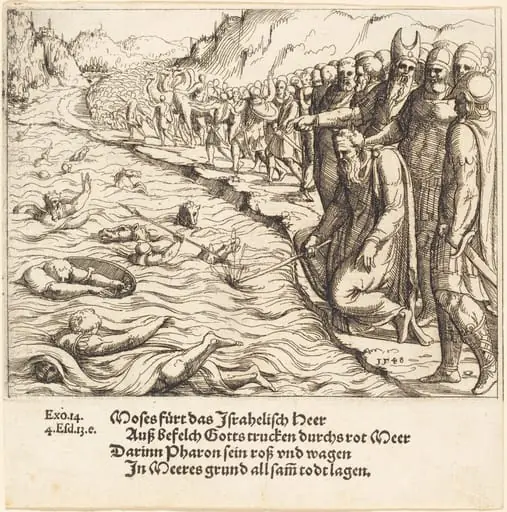
Executed in black-and-white etching, the work features Hirschvogel's characteristic attention to detail, as seen in the textured wooden floor, pillared architecture, and the expressive postures of the figures, all within a serene and meaningful composition.
History & Provenance
Created between 1545-1549, a period during which Hirschvogel produced thirty-five small landscape etchings, The Annunciation reflects his association with the Danube School, active in 16th-century Bavaria and Austria.
Context
The inclusion of German text underscores the work's regional audience, while the scene's calm intensity and use of light align with the artistic and religious sensibilities of the time.
Legacy
While specific lasting impacts of The Annunciation are not detailed, it remains representative of Hirschvogel's etching prowess and the Danube School's influence on religious art of the era.
Artist & collection
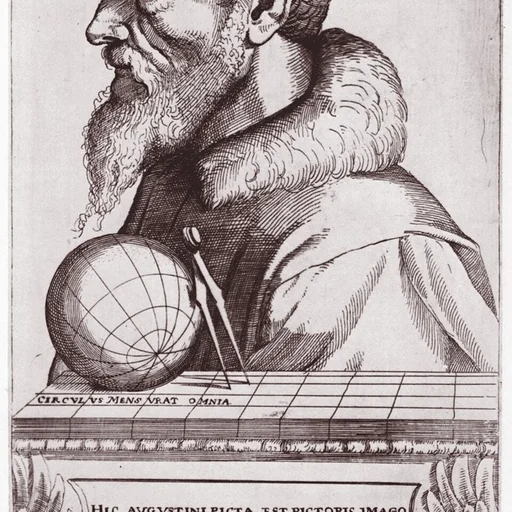
Artist
Augustin Hirschvogel (1503 – February 1553) was a German artist, mathematician, and cartographer known primarily for his etchings.