Artwork
The Opening of the Seventh Seal
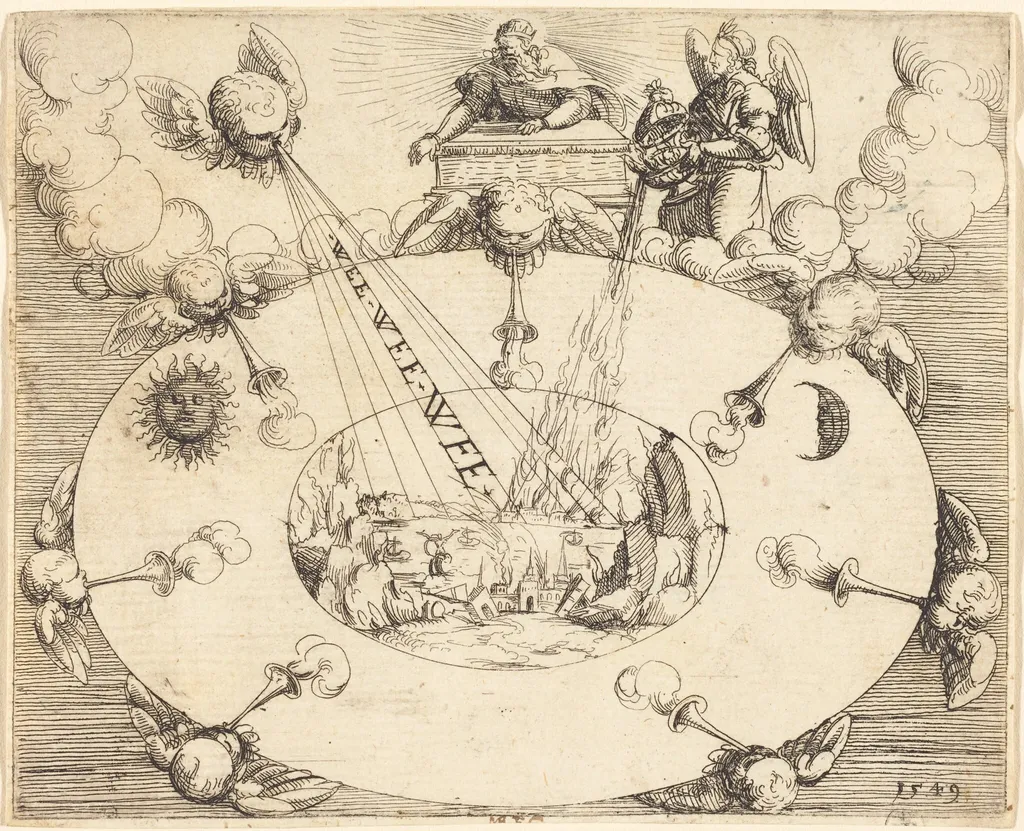
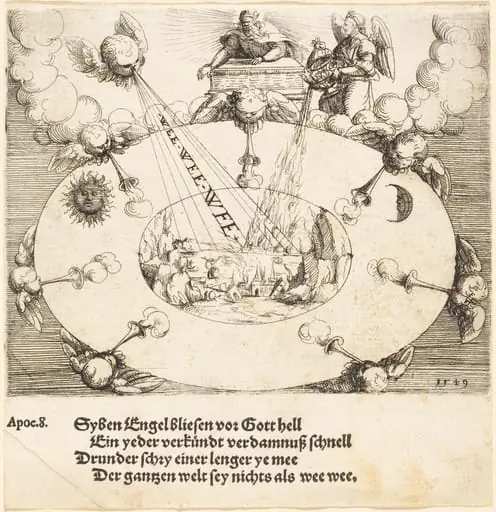
The Opening of the Seventh Seal is an ink print by the Renaissance artist Augustin Hirschvogel. It dates from 1549 and is held in the collection of the National Gallery of Art.
About this work
Overview
Augustin Hirschvogel’s 1549 etching *The Opening of the Seventh Seal* belongs to the late‑Renaissance output of the Danube School. Executed as a single‑plate print, the work combines a fantastical, apocalyptic tableau with the artist’s characteristic attention to atmospheric landscape, reflecting the broader interests of mid‑16th‑century Bavarian and Austrian printmakers.
Subject & Meaning
The composition presents a skeletal figure enthroned, clutching an hourglass, while a searing landscape below teems with burning ships and fleeing figures. Surrounding clouds and trumpeting angels suggest a celestial announcement, evoking the biblical moment when the final seal of Revelation is broken and the world is plunged into chaos.
Technique & Style
Hirschvogel employed fine, incised lines typical of etching, using acid to bite the design into a copper plate. The resulting prints display a delicate, almost trembling line quality that renders both the ethereal sky and the turbulent ground. This method allowed for the intricate detailing of the skeletal monarch and the swirling, fiery environment.
History & Provenance
Created during Hirschvogel’s prolific period of landscape etchings (1545‑1549), the piece reflects his involvement in the artistic circles of the Danube region. While specific ownership records are scarce, the work has been cited in studies of early modern German printmaking as an example of the Danube School’s integration of narrative and natural scenery.
Artist & collection
Artist
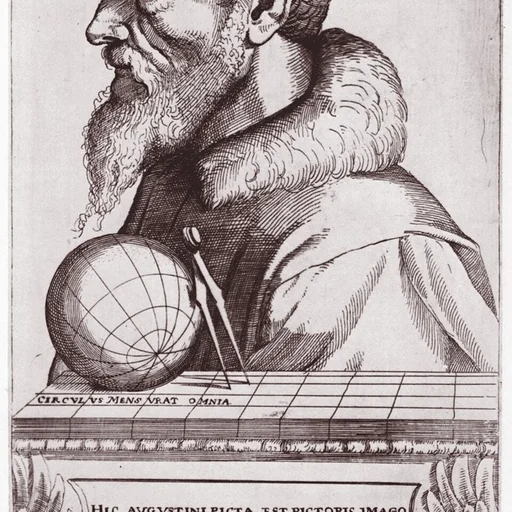
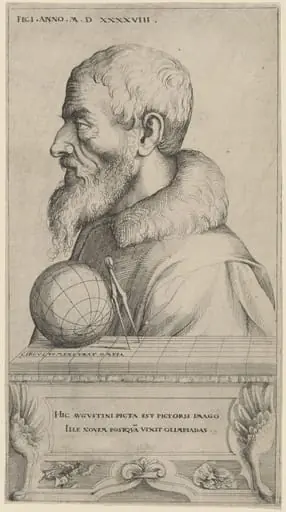
Augustin Hirschvogel (1503 – February 1553) was a German artist, mathematician, and cartographer known primarily for his etchings.

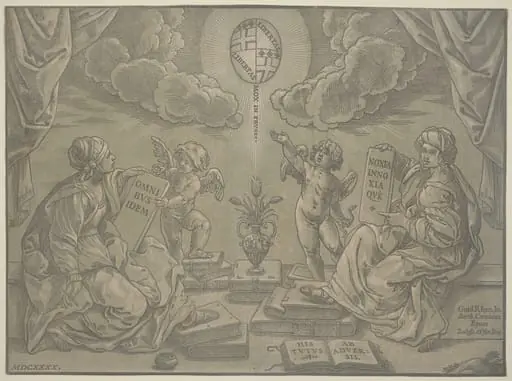 Thesis
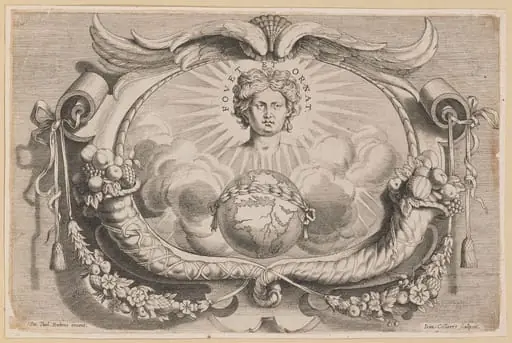 Printer's Device for Jan van Keerbergen: Vignette for Biblia Cum Glossa Ordinaria
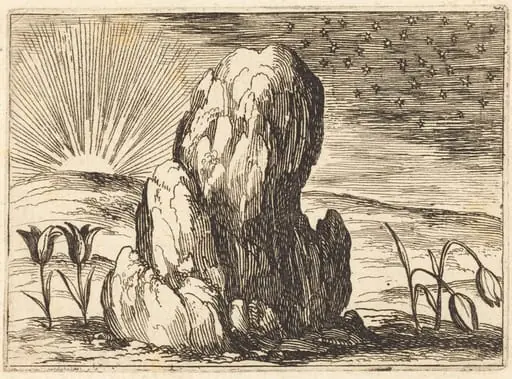 The Tulips and the Sun
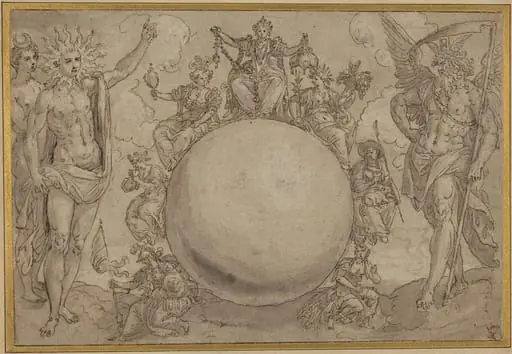 Apollo, Diana, and Time with the Cyclic Vicissitudes of Human Life
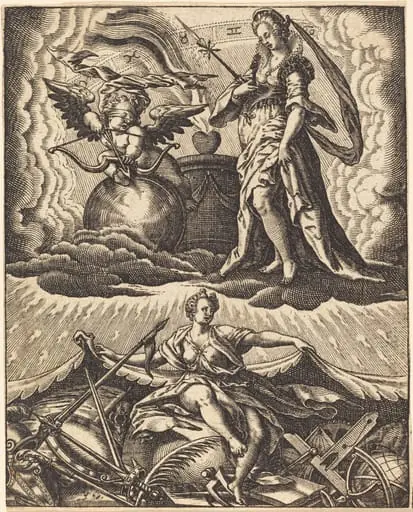 Exempel und Lehr Jetziger Welt Lauf
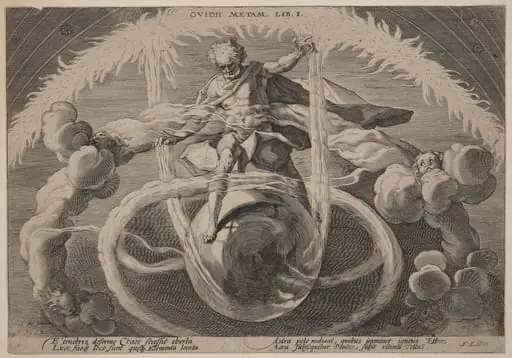 Chaos: The Untangling of Chaos, or the Creation of the Elements
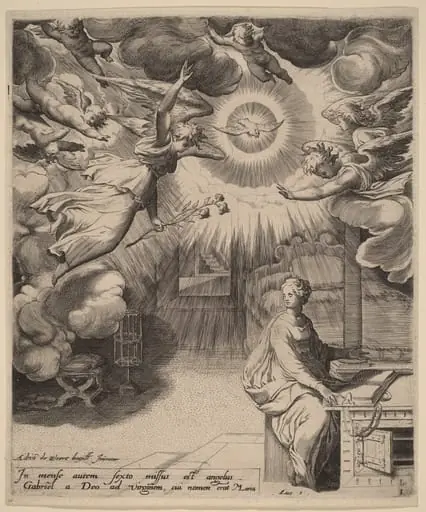 The Annunciation
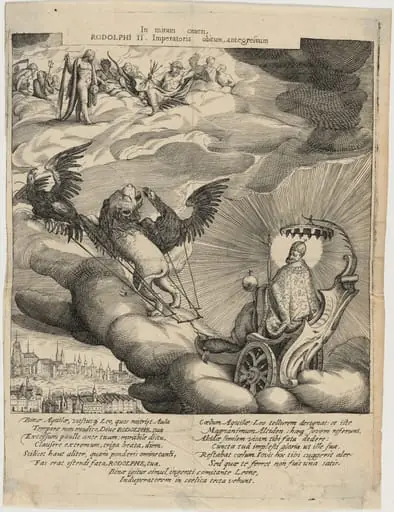 Rudolph II in Chariot Drawn by Lion and Eagle
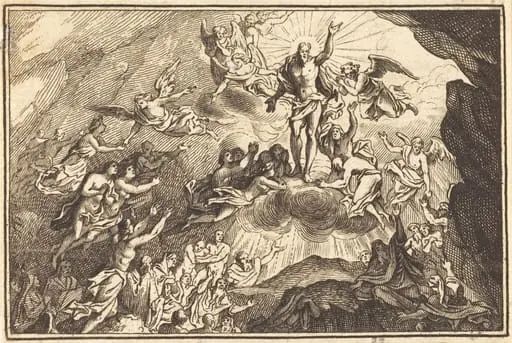 Descent into Limbo
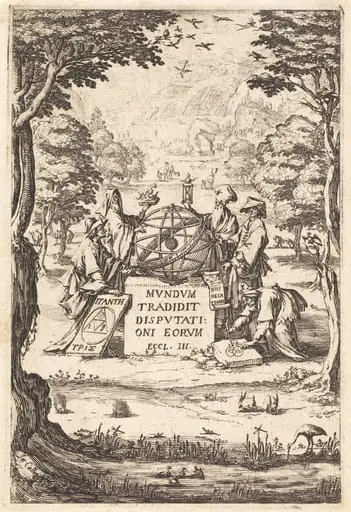 Frontispiece for the Sacred Cosmologia (Title with Astrologers)
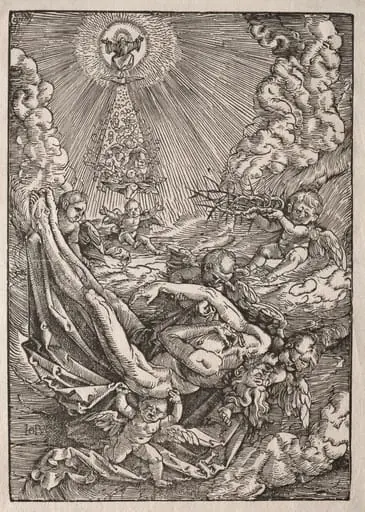 Christ Carried to Heaven by Angels
 The Opening of the Seventh Seal