Artwork
William Winstanley, Poet and Compiler
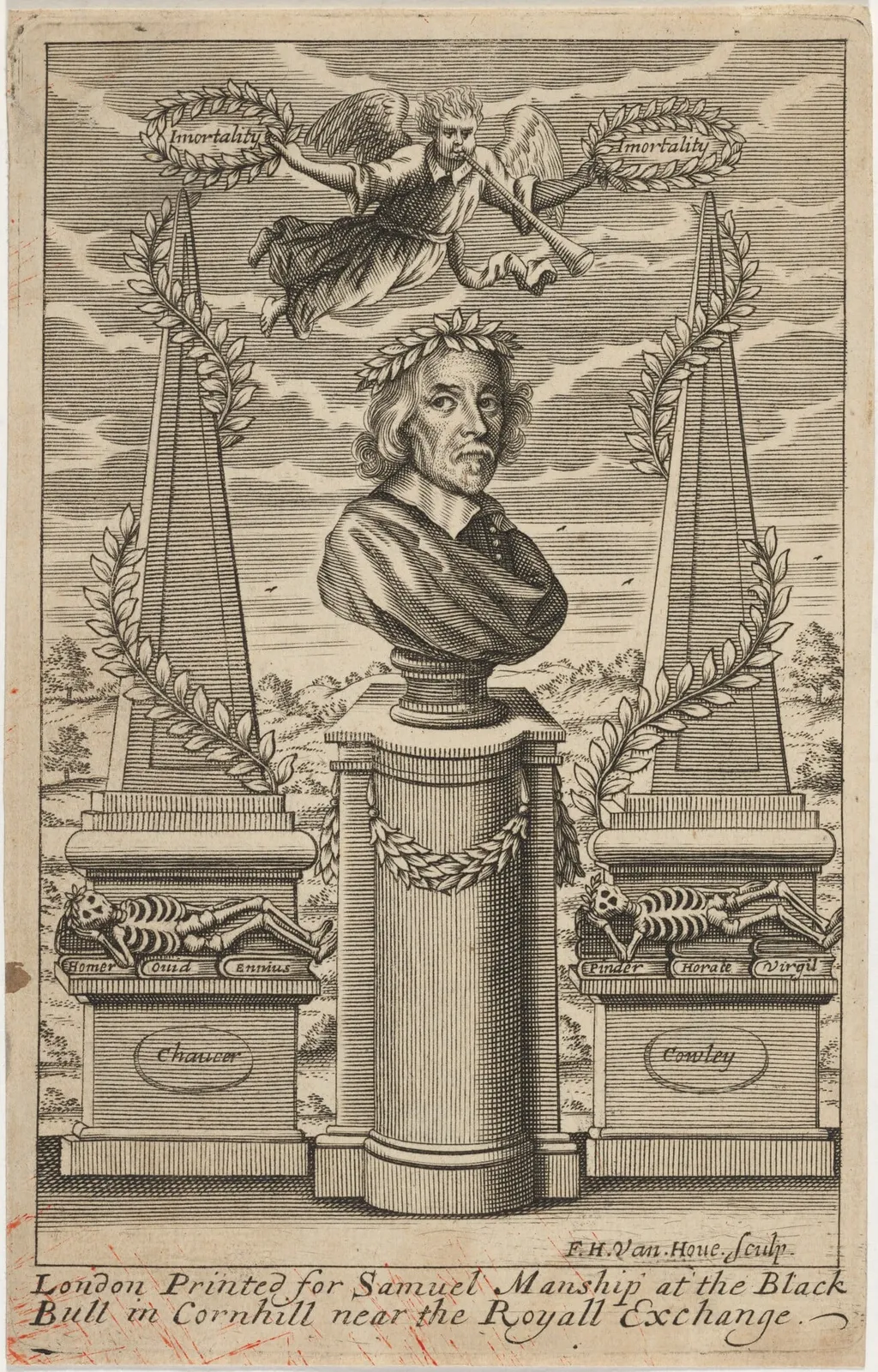
William Winstanley, Poet and Compiler is an ink print by the Baroque artist Frederik Hendrik van den Hove. It dates from 1687 and is held in the collection of the National Gallery of Art.
About this work
Below the pedestal, there are smaller carvings of lions and names like Homer and Chaucer.
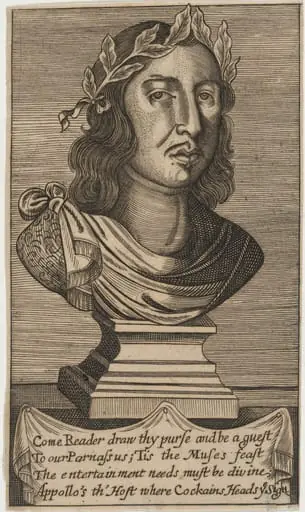
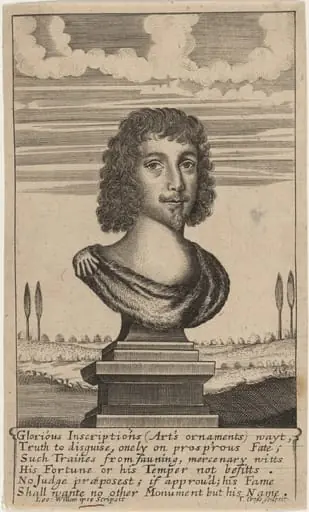
This print shows a bearded man’s head on a pedestal, looking serious. Above him, two winged kids hold up a wreath with the word “immortality” written on it. Below the pedestal, there are smaller carvings of lions and names like Homer and Chaucer.
The print was made in 1687 to honor a man who wrote and collected poems. The artist used fine lines to create shadows and depth.
Want to see how this was made? Look up engraving.
Overview
Created in 1687, this copperplate engraving by Frederik Hendrik van den Hove commemorates William Winstanley, a 17th‑century poet and anthologist. The composition centers a solemn, bearded male figure set upon a pedestal, flanked by allegorical elements that reference literary eternity and the classical tradition.
Subject & Meaning
The central portrait presents Winstanley as a dignified scholar, while two winged youths above him lift a wreath inscribed with the word “immortality,” suggesting the lasting nature of his poetic contributions. Beneath the base, carved lions and the names of Homer and Chaucer invoke the lineage of great writers to which Winstanley is linked.
Technique & Style
Van den Hove employed delicate, cross‑hatching and fine linear strokes to model light and shadow, giving the figure a three‑dimensional presence despite the flat medium. The engraving’s precise detailing of facial features, drapery, and ornamental motifs reflects the Dutch printmaking standards of the late 1600s.
History & Provenance
The print was issued shortly after Winstanley’s death as a tribute to his literary work. It circulated among collectors of portrait prints in the Netherlands and England, and later entered museum collections as an example of commemorative engraving from the period.
Artist & collection