Artwork
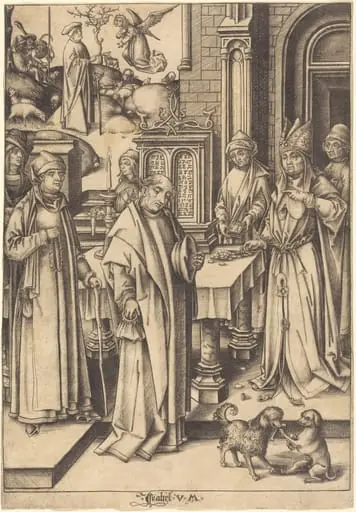
Christ Washing the Feet of the Apostles
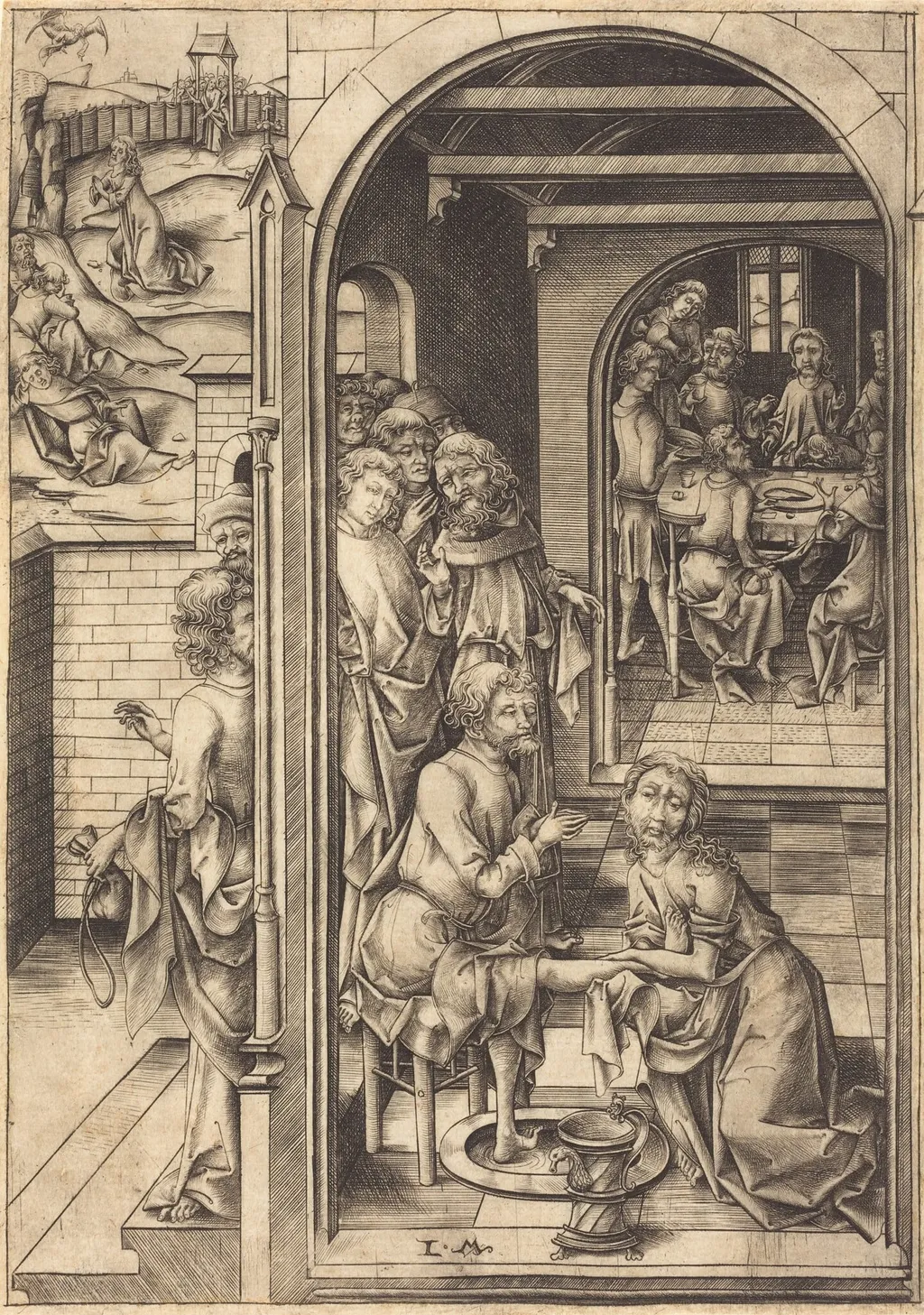
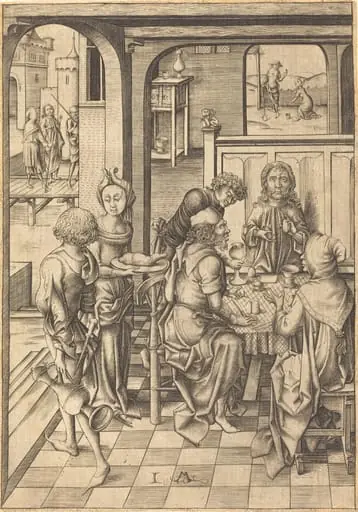
Christ Washing the Feet of the Apostles is an ink print by the Renaissance artist Israhel van Meckenem. It dates from 1480 and is held in the collection of the National Gallery of Art.
About this work
Overview
His technical precision and prolific output helped disseminate devotional imagery across Northern Europe during the transition from manuscript to print culture.
Created around 1480 by Israhel van Meckenem, this engraving on laid paper depicts Christ performing the act of foot-washing among his apostles. As one of the most productive printmakers of the late 15th century, van Meckenem specialized in religious subjects and often reinterpreted existing compositions. His technical precision and prolific output helped disseminate devotional imagery across Northern Europe during the transition from manuscript to print culture.
Subject & Meaning
The scene illustrates John 13:5–8, in which Christ humbly washes the feet of his disciples to demonstrate service and humility. The apostles react with varied expressions—some in astonishment, others in quiet contemplation—emphasizing the spiritual weight of the moment. Beyond the immediate narrative, the act symbolizes Christian charity and the inversion of social hierarchy, a theme central to medieval and early Renaissance piety.
Technique & Style
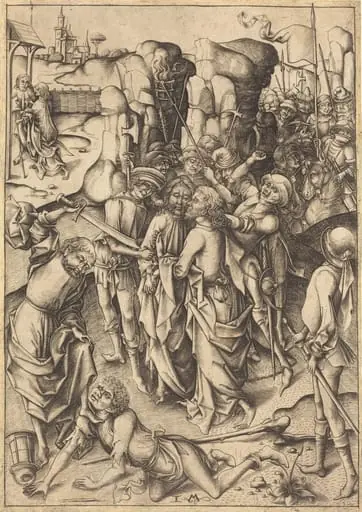
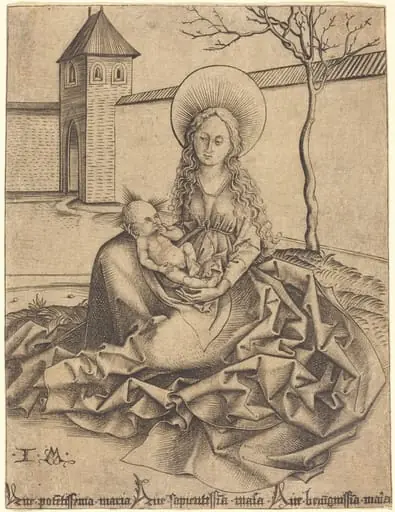
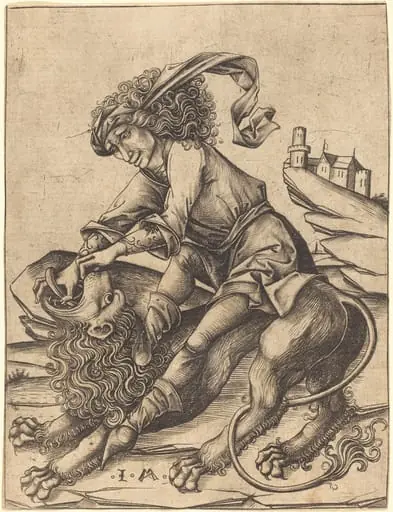
Van Meckenem employed fine, controlled lines to render texture and volume, using cross-hatching to model forms with remarkable clarity. The folds of garments, the musculature of limbs, and the architectural details are defined by dense, parallel strokes that build shadow and depth. The sharp contrasts between inked lines and the white paper enhance the three-dimensionality of the figures, reflecting the engraver’s mastery of tonal gradation within a monochrome medium.
History & Provenance
The print was produced during van Meckenem’s active years in Bocholt, Germany, where he operated a workshop that likely produced multiple impressions for sale. Though no early provenance is documented for this specific impression, similar engravings by him circulated widely in religious households and monastic communities. Its survival in good condition suggests it was carefully preserved, possibly as a devotional object.
Context
In the late 15th century, engraved prints served as affordable religious images for private devotion, especially in regions where access to paintings or stained glass was limited. Van Meckenem’s work aligned with broader Northern European trends that emphasized detailed realism and emotional immediacy. His adaptations of earlier compositions, including those by Martin Schongauer, helped standardize visual narratives for a growing literate lay audience.
Legacy
Van Meckenem’s engravings, including this one, influenced later printmakers through their clarity of form and compositional discipline. His ability to translate complex scenes into precise linear designs contributed to the evolution of printmaking as an independent art form. While less celebrated than contemporaries like Dürer, his output laid foundational techniques for the widespread use of prints in religious education and personal meditation.
Artist & collection
Artist
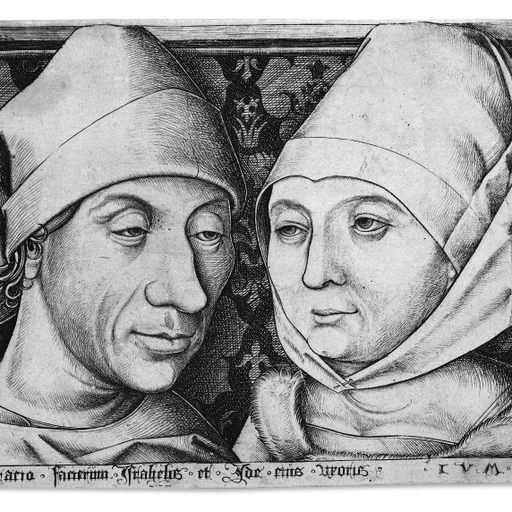
Israhel van Meckenem (c. 1445 – 10 November 1503), also known as Israhel van Meckenem the Younger, was a German printmaker and goldsmith, perhaps of a Dutch family origin. He was the most prolific engraver of the…