Artwork
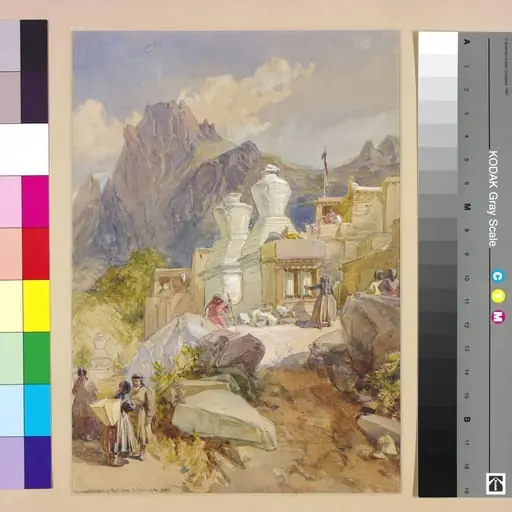
Lama Praying Cylinder
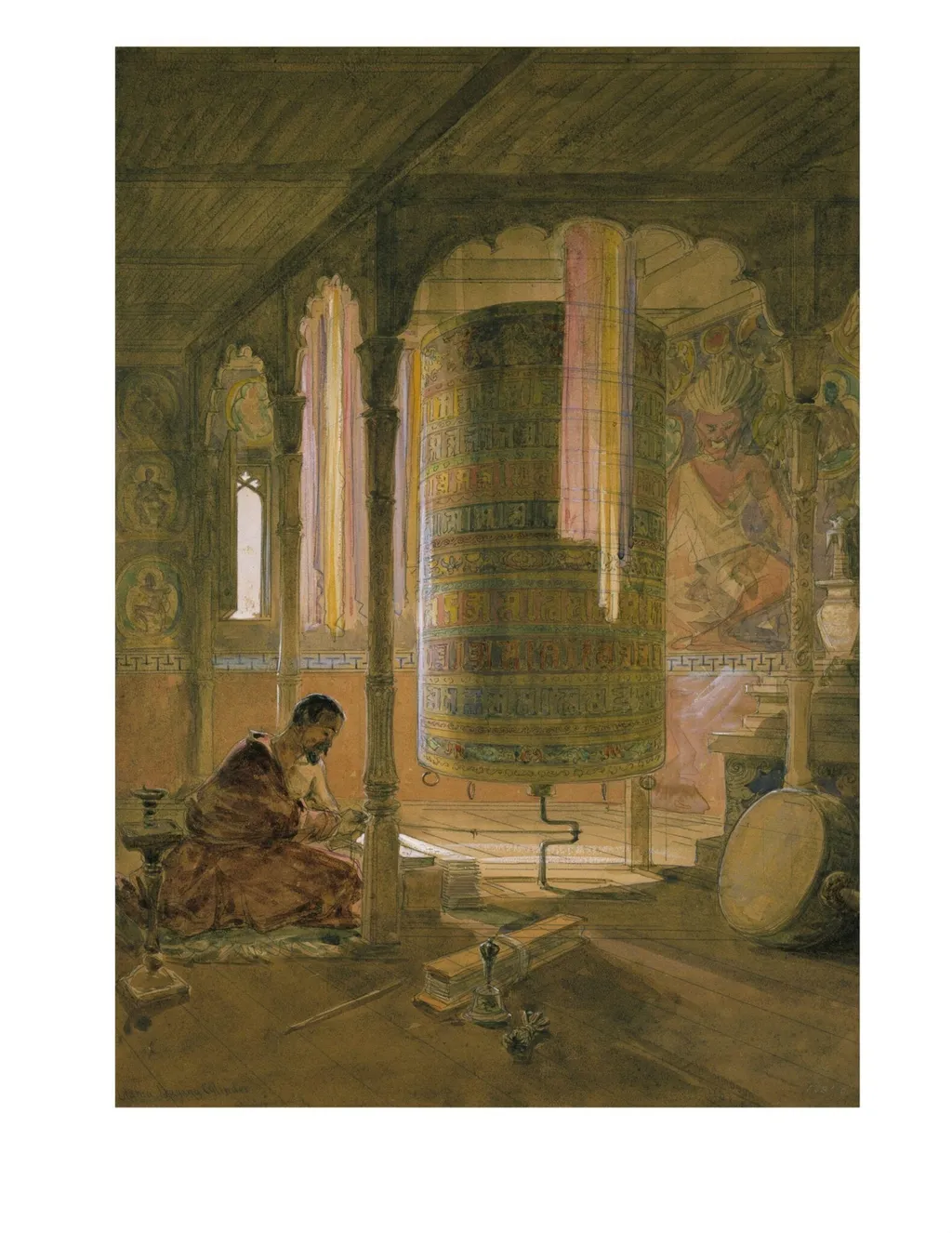
Lama Praying Cylinder is a paint painting by the Impressionist artist William Simpson. It dates from 1861 and is held in the collection of the Victoria and Albert Museum.
About this work
William Simpson painted *Lama Praying Cylinder* in 1861. It’s a painting, mixing Impressionism and Realism.
Simpson first sketched this scene in India in 1859. He later turned it into a colorful watercolor back in London in 1862. The work reflects his travels and studies after the Revolt of 1857.
Check out more by Simpson at the Victoria and Albert Museum.
Overview
Lama Praying Cylinder is a watercolor painted by British artist William Simpson in 1861. The work depicts a Buddhist monastery interior, focusing on a large, brightly painted prayer‑wheel and a monk attending to it. The composition combines detailed observation with a vivid palette, reflecting Simpson’s interest in both realistic rendering and atmospheric effect.
Subject & Meaning
The central element is a nine‑foot‑high cylindrical prayer‑wheel, adorned with multicoloured ornaments and Tibetan script, mounted on iron spindles at each end. A monk is shown operating the wheel by pulling a cord attached to a lower crank, illustrating a ritual act of devotion within the monastic setting.
Technique & Style
Simpson employed watercolor to achieve luminous colour and fine line work, translating his on‑site pencil sketches into a finished piece after returning to London. The painting balances the precise detailing of the wheel’s decoration with broader, impressionistic washes that convey the interior’s light and atmosphere.
History & Provenance
Simpson first made a rapid pencil sketch of the monastery during a 1859 visit to India, after his earlier assignments documenting the Crimean War and the Indian Rebellion of 1857. He completed the watercolor in London in 1862, later publishing a description of the scene in his 1896 book on Buddhist prayer‑wheels.
Context
The work forms part of Simpson’s larger series of Indian subjects commissioned by the London lithography firm Day and Sons. It reflects the Victorian fascination with exotic locales and the artist’s role as a visual recorder of British imperial encounters, particularly in the aftermath of the 1857 revolt.
Own this work as a print
Artist & collection
Artist
William Simpson drew what he saw during the Crimean War in the 1850s, including sketches of battles and camps in Crimea and Constantinople.

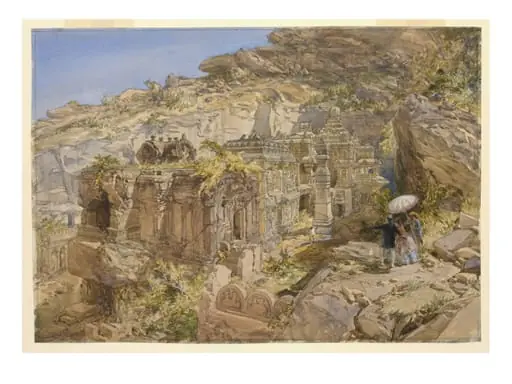
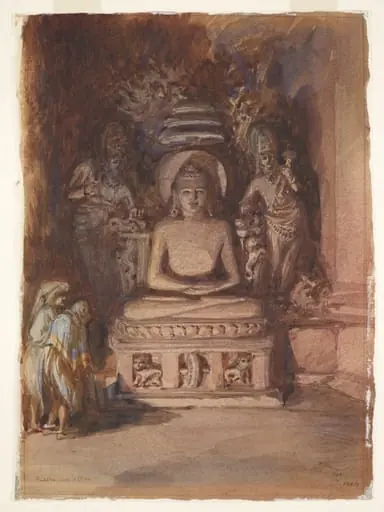 Buddha, Caves of Ellora
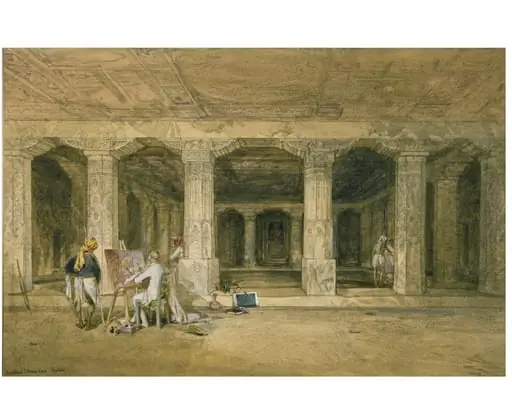 Buddhist vihara cave, Ajanta
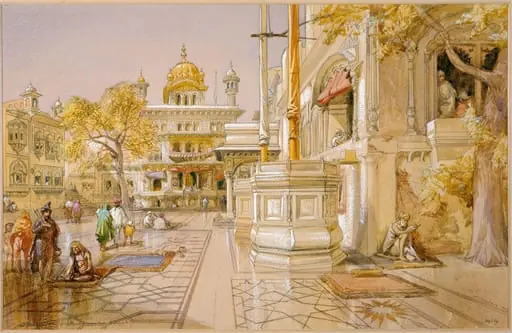 Akal Boonga at the Golden temple. Umritsar. Punjaub
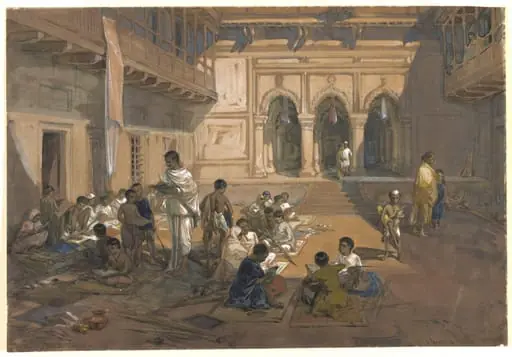 Indian School Calcutta
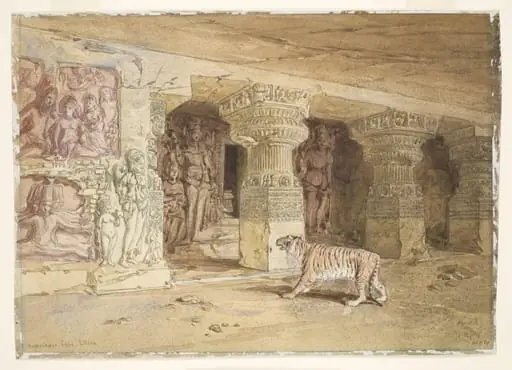 Rameshwar cave, Ellora
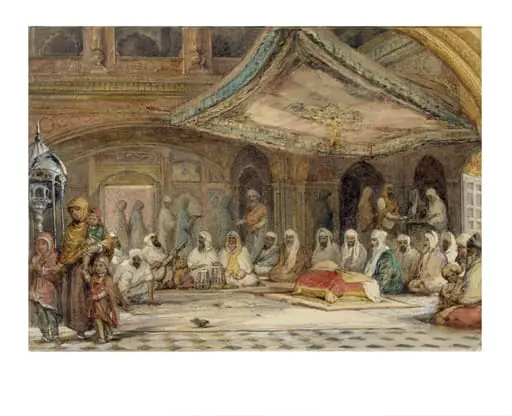 Interior of the Golden Temple, Amritsar
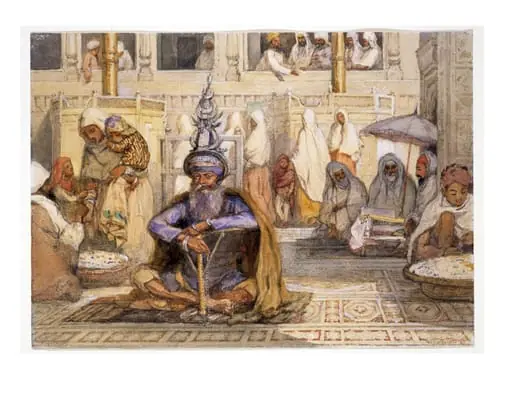 Untitled
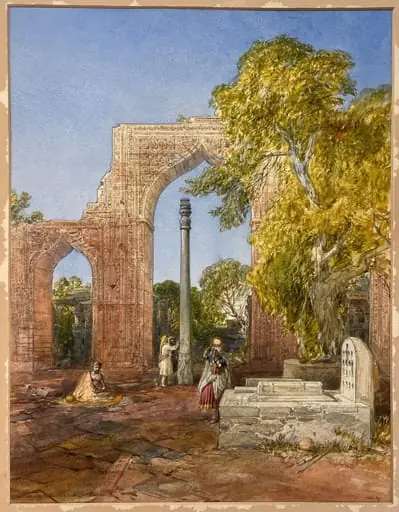 Iron Laht at the Kootub, Old Delhi
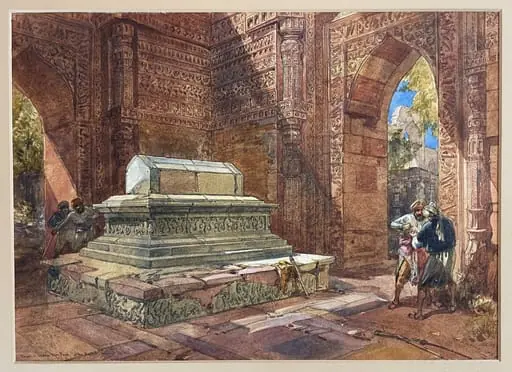 Tomb of Shams ud-Din Iltutmish at the Qutub Minar, Delhi
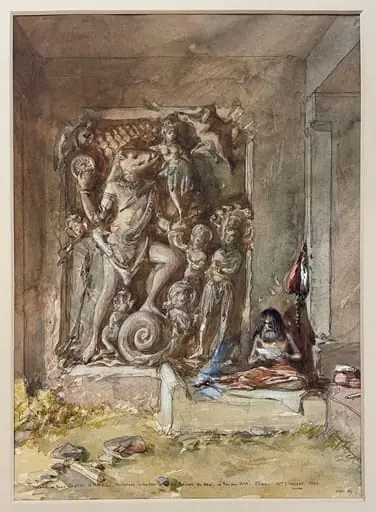 Varaha or Boar avatar of Vishnu
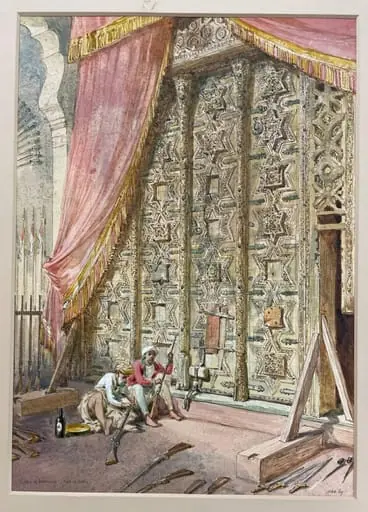 The Somnath gates, Fort Agra