Artwork
Rameshwar cave, Ellora
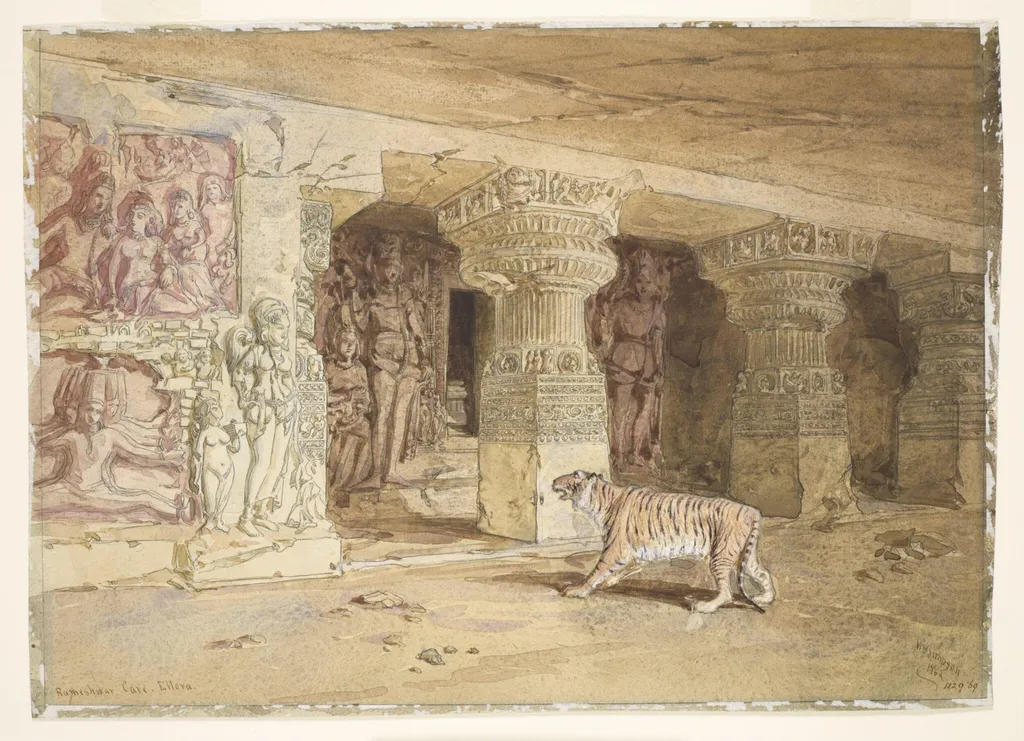
Rameshwar cave, Ellora is a paint painting by the Impressionist artist William Simpson. It dates from 1862 and is held in the collection of the Victoria and Albert Museum.
About this work
Painted in 1862, this watercolour shows the inside of a cave at Ellora. William Simpson traveled India after the 1857 Mutiny, sketching and painting what he saw.
He spent seven years on a big book project with 250 plates. His careful notes and sketches became a true record of the places he visited.
Next time you’re in London, look up the Victoria and Albert Museum.
Overview
This 1862 watercolour depicts the interior of Rameshwar Cave at Ellora, part of a series documenting Indian sites following the 1857 uprising. Executed in transparent washes, the work balances architectural precision with atmospheric effects, reflecting the artist’s dual role as recorder and interpreter of colonial landscapes.
Subject & Meaning
The scene centers on a carved doorway guardian flanked by a tiger, its gaze directed upward in apparent veneration. To the left, a bas-relief panel illustrates Shiva and Parvati enthroned atop Mount Kailasa, while the demon king Ravana strains beneath. The juxtaposition of sacred iconography and living wildlife imbues the space with narrative tension and romanticized exoticism.
Technique & Style
Simpson employed delicate glazes to render stone surfaces and foliage, allowing luminous underlayers to suggest depth. Linear perspective organizes the colonnaded hall, while looser brushwork animates the tiger’s fur and surrounding vegetation. The approach merges topographical accuracy with a Picturesque sensibility, softening structural details through atmospheric effects.
History & Provenance
Commissioned by Day and Sons, the work formed part of a projected four-volume publication documenting post-Mutiny India. Financial difficulties at the firm delayed completion, and Simpson spent three years in the field followed by four in London refining sketches. The painting entered public collections after the publisher’s 1867 liquidation.
Context
Created during British consolidation of administrative control, the series positioned colonial infrastructure within a framework of cultural preservation. Simpson’s diaries reveal an intent to balance ethnographic observation with aesthetic appeal, catering to both imperial archives and Victorian audiences fascinated by distant antiquities.
Legacy
The watercolour exemplifies mid-19th-century colonial visual culture, where archaeological documentation intersected with romanticized travelogue. Its inclusion in institutional collections reflects shifting attitudes toward non-Western heritage, transitioning from exotic spectacle to curated historical record within metropolitan museums.
Artist & collection


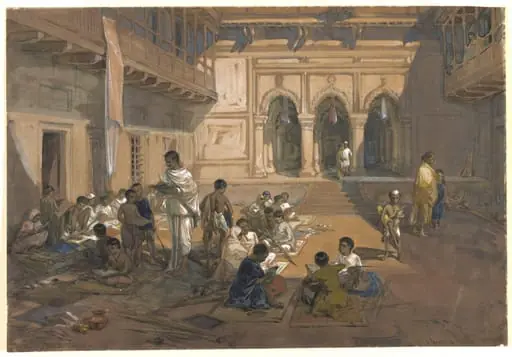
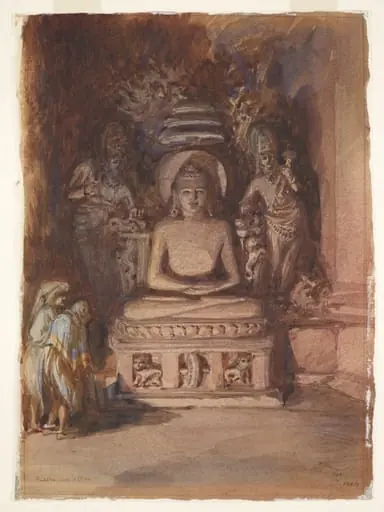 Buddha, Caves of Ellora
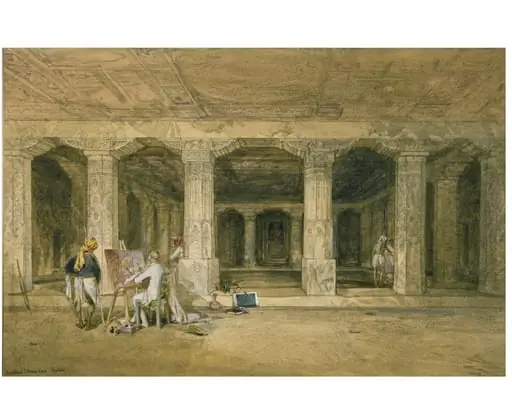 Buddhist vihara cave, Ajanta
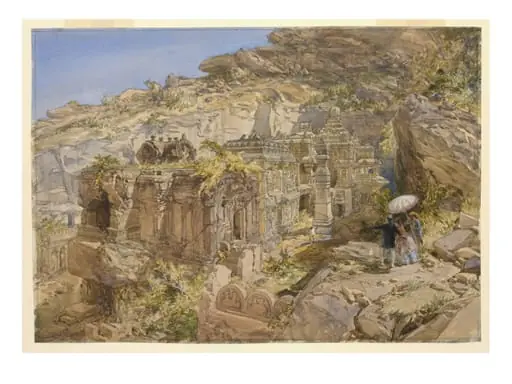 Kailasanatha temple, Ellora
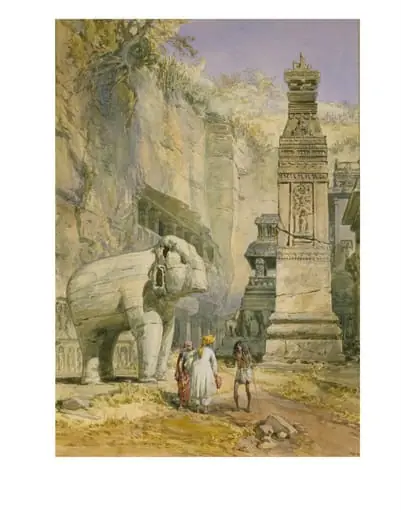 Untitled
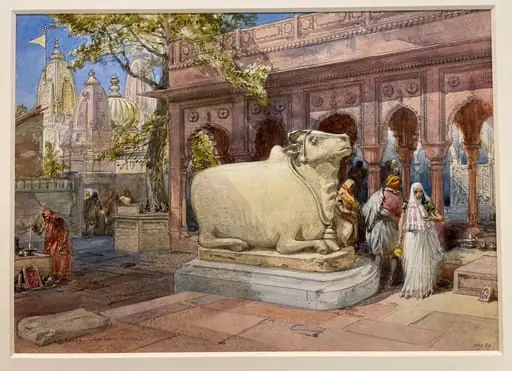 The Bull Nandi in the courtyard of the Golden Temple, Benares
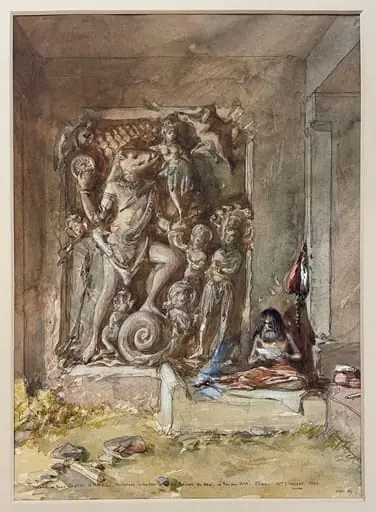 Varaha or Boar avatar of Vishnu
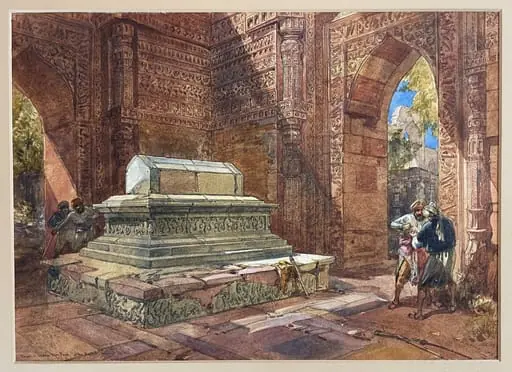 Tomb of Shams ud-Din Iltutmish at the Qutub Minar, Delhi
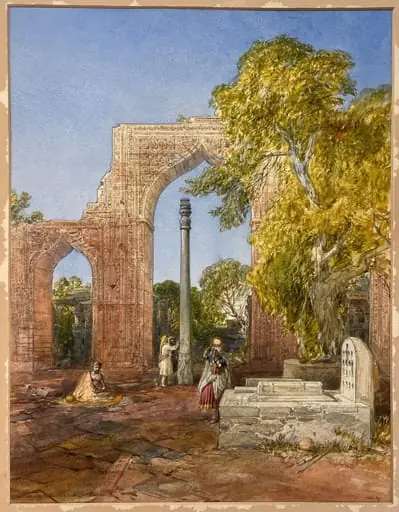 Iron Laht at the Kootub, Old Delhi
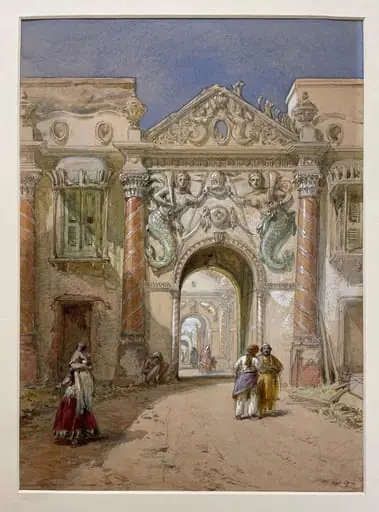 Mermaid gate, Kaiserbagh, Lucknow
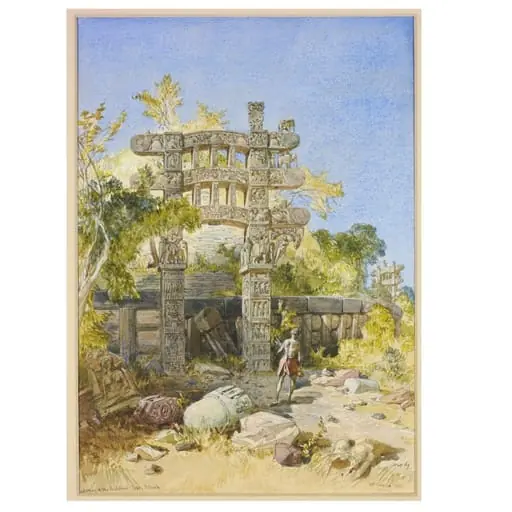 Gateway of the Buddhist Top at Sanchi
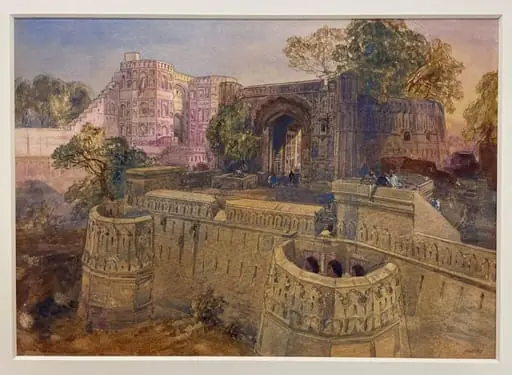 Taxali Darwaza, Lahore