Artwork
The Seconda Macchina for the Chinea of 1778: A Dwelling near Monte Testaccio
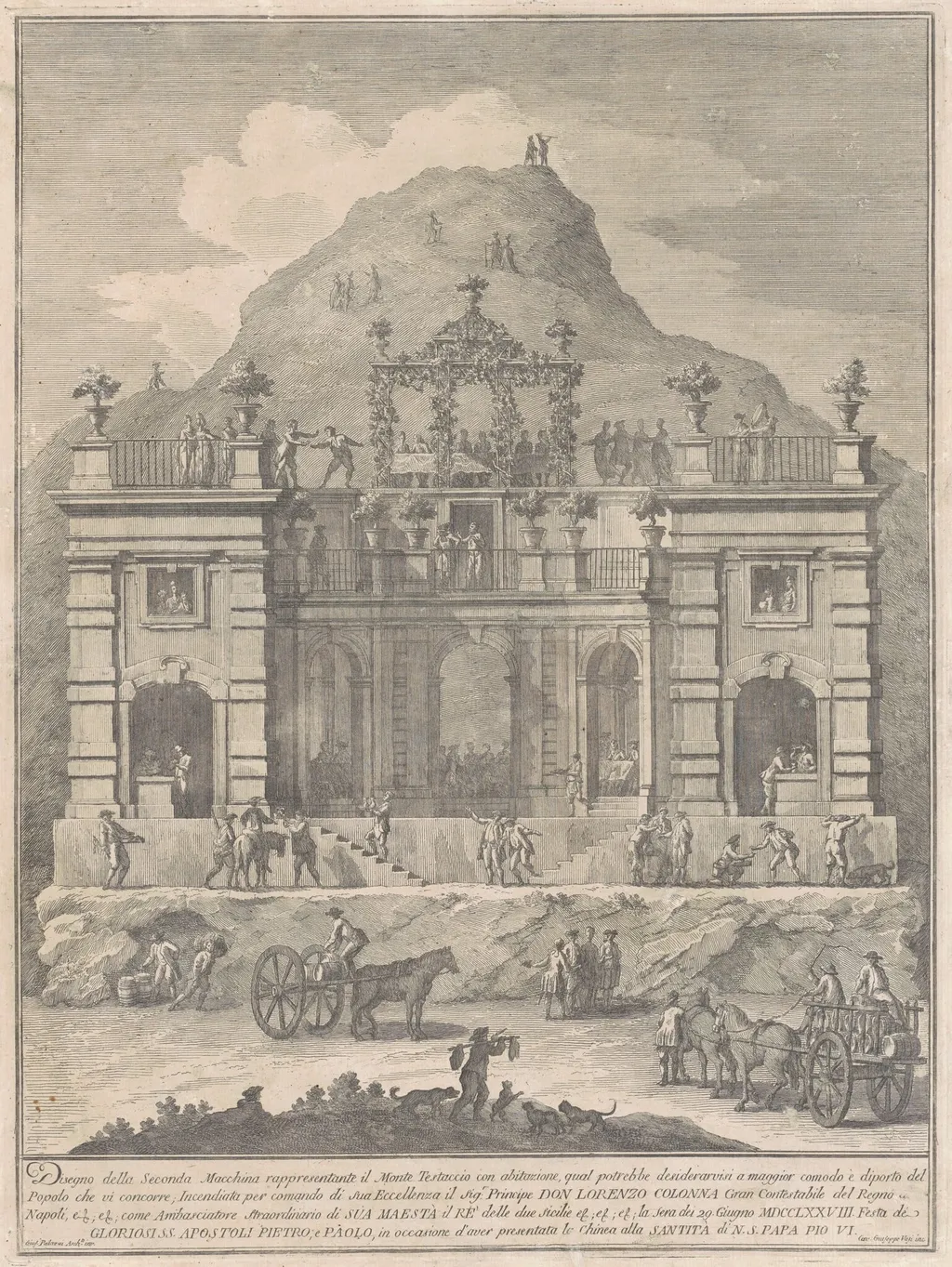
The Seconda Macchina for the Chinea of 1778: A Dwelling near Monte Testaccio is an ink print by the Romanticist artist Giuseppe Vasi. It dates from 1778 and is held in the collection of the National Gallery of Art.
About this work
On top sits a small temple with statues, and below it’s a multi-level stage with people walking around, playing music, and watching.
This drawing shows a giant, fake mountain built for a party. On top sits a small temple with statues, and below it’s a multi-level stage with people walking around, playing music, and watching. At the bottom, crowds gather, some riding in carts pulled by horses or donkeys, while others walk with dogs or carry goods.
The text at the bottom explains this was built for a special event in 1778, likely a celebration. The tiny details—like the people’s clothes and the stage’s decorations—make it feel like a bustling village inside a mountain.
Want to see more? Check out the technique: etching.
Overview
Giuseppe Vasi’s 1778 etching, titled *The Seconda Macchina for the Chinea of 1778: A Dwelling near Monte Testaccio*, records an elaborate temporary structure erected for the Chinea festivities. The print captures a fabricated hill that served as a theatrical setting, complete with a small temple, multi‑level stage, and bustling crowds that populated the scene.
Subject & Meaning
The composition depicts an artificial mountain constructed for a public celebration, its summit crowned by a diminutive temple surrounded by statues. Below, a tiered platform hosts musicians and spectators, while the foreground shows a mixture of pedestrians, animal‑drawn carts, and vendors, suggesting a festive village atmosphere within the fabricated landscape.
Technique & Style
Executed in etching, Vasi employs fine line work to render architectural details and the varied textures of clothing, animal fur, and stone. The print’s intricate hatching creates depth, allowing the viewer to discern the layered stages and the crowded lower ground, characteristic of Vasi’s precise topographical approach.
History & Provenance
Created in 1778, the image documents the second “Macchina” built for the annual Chinea, a diplomatic ceremony honoring the Pope’s tribute to the King of Spain. The work likely served as a visual record for contemporary audiences and later entered collections of prints documenting Roman public spectacles.
Context
The Chinea celebration combined political homage with elaborate public entertainments, often featuring temporary architectural marvels. Vasi’s etching situates the artificial mountain near Monte Testaccio, an area known for its ancient pottery fragments, thereby linking the temporary spectacle to a historically layered part of Rome.
Legacy
Vasi’s print contributes to the visual archive of 18th‑century Roman festivities, offering scholars insight into the scale and design of temporary structures used in civic ceremonies. Its detailed representation aids the study of urban spectacle, performance space, and the interplay between architecture and public celebration in the period.
Artist & collection

 The Seconda Macchina for the Chinea of 1766: A Theater for Athletic Games
 The Prima Macchina for the Chinea of 1765: The Garden of the Hesperides
 The Prima Macchina for the Chinea of 1769: A "Deliziosa"
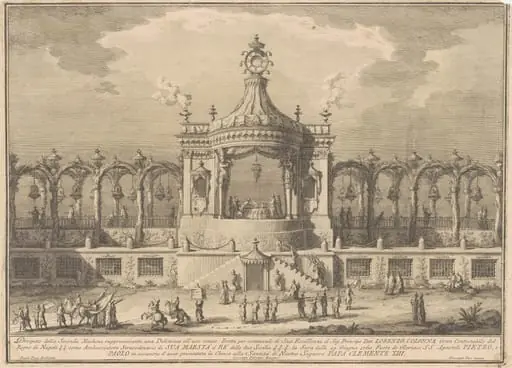 The Seconda Macchina for the Chinea of 1760: A Chinoiserie Pavilion
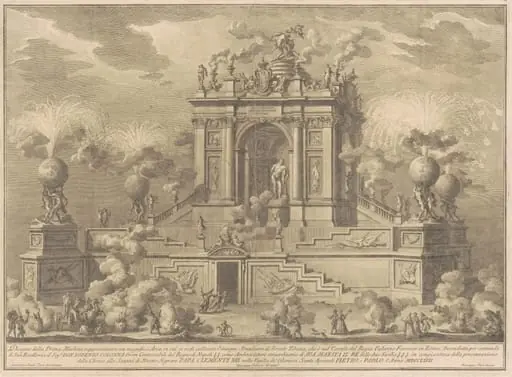 The Prima Macchina for the Chinea of 1767: A Triumphal Arch with the Farnese Hercules
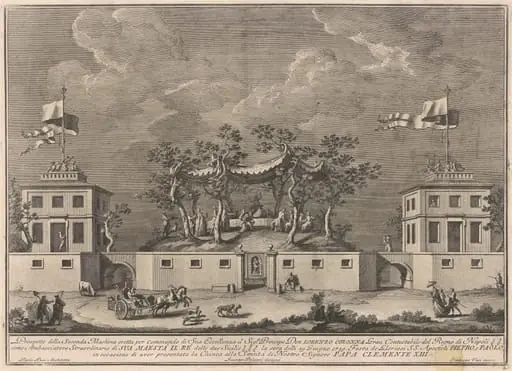 The Seconda Macchina for the Chinea of 1759: A "Deliziosa" with a Bacchanal
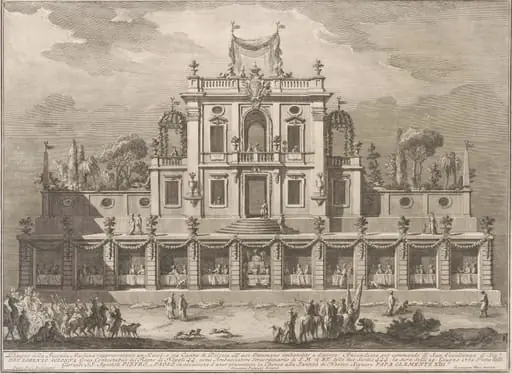 The Seconda Macchina for the Chinea of 1762: A Kiosk, or Pleasure-House in Ottoman Style
 The Seconda Macchina for the Chinea of 1763: The Grape Harvest
 The Prima Macchina for the Chinea of 1778: A Countryside Belevedere with Hercules and Antaeus
 The Seconda Macchina for the Chinea of 1771: A Pleasure Palace Dedicated to Bacchus
 The Seconda Macchina for the Chinea of 1765: A Decorated Building with Cockaigne Poles
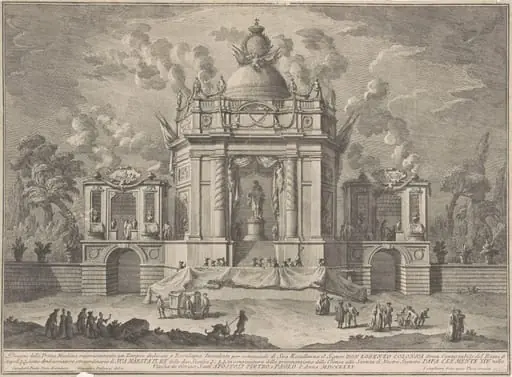 The Prima Macchina for the Chinea of 1771: The Temple of Asclepius
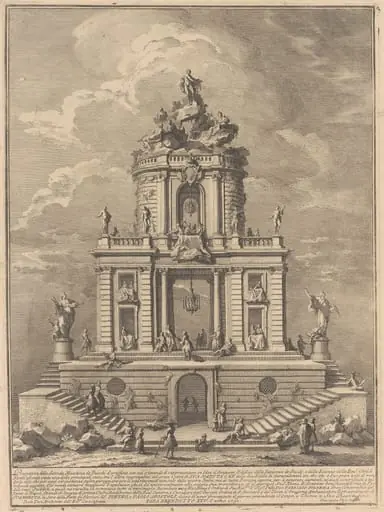 The Seconda Macchina for the Chinea of 1751: The Palace of Wisdom, Studies, and the Sciences
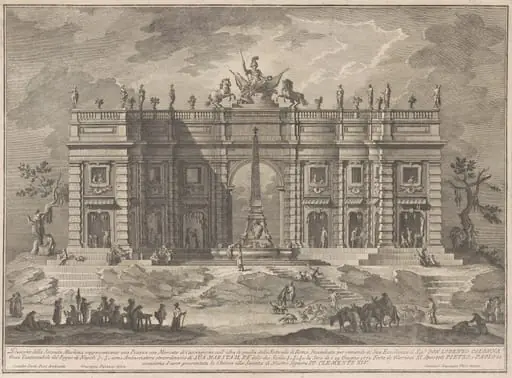 The Seconda Macchina for the Chinea of 1772: A Square with a Game Market and the Pantheon Fountain
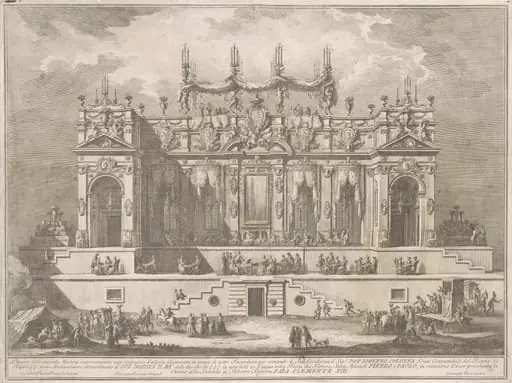 The Seconda Macchina for the Chinea of 1764: A Magnificent Gallery Illuminated at Night
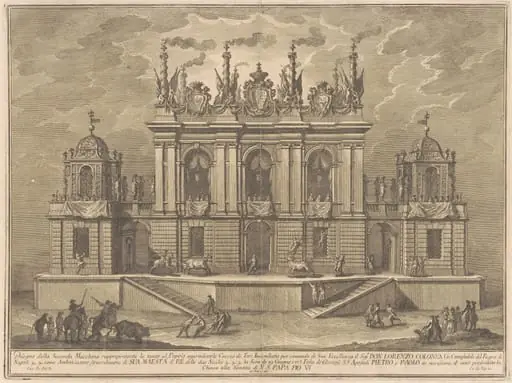 The Seconda Macchina for the Chinea of 1775: A Bull-fight
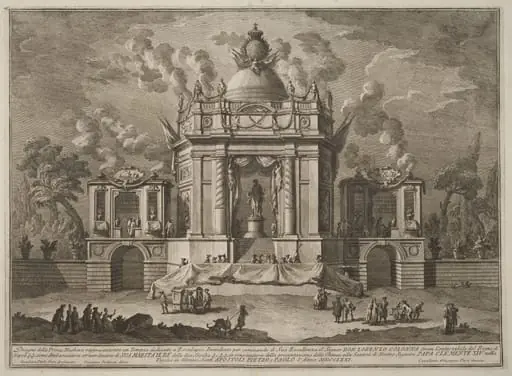 The Prima Macchina for the Chinea of 1771: The Temple of Asclepius