Artwork
American Swift
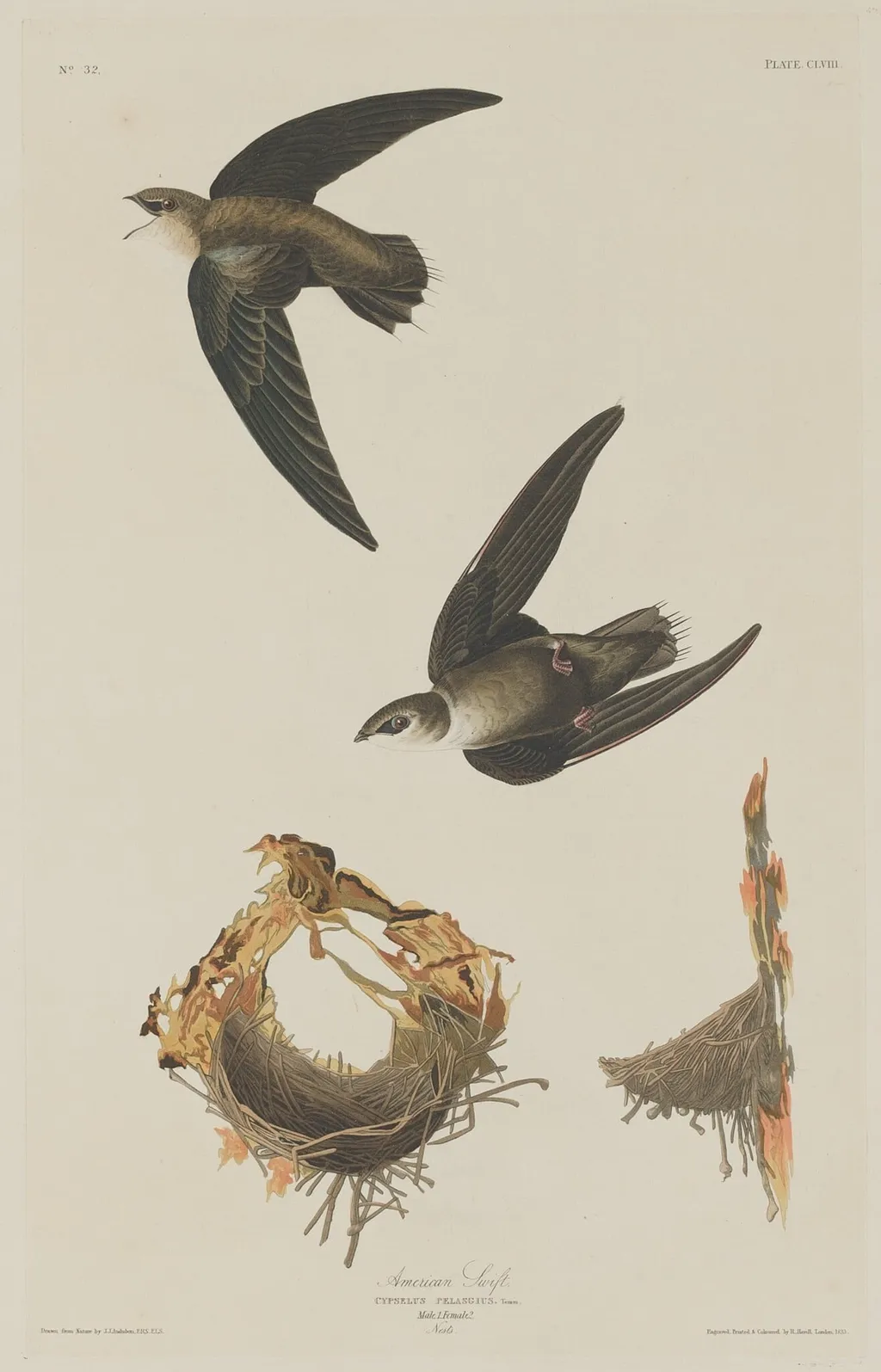
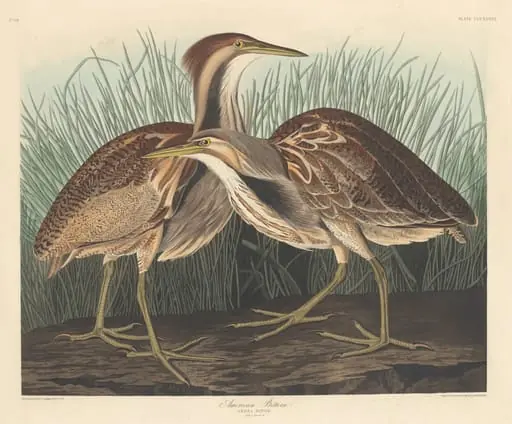
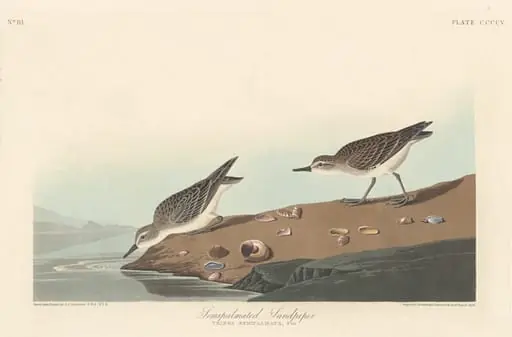
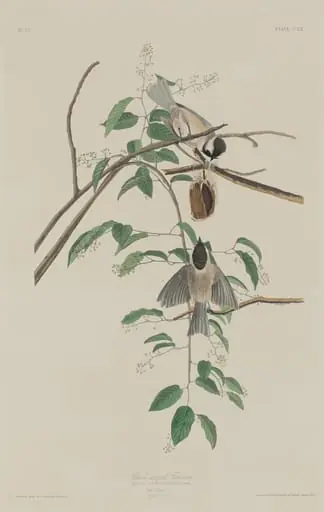
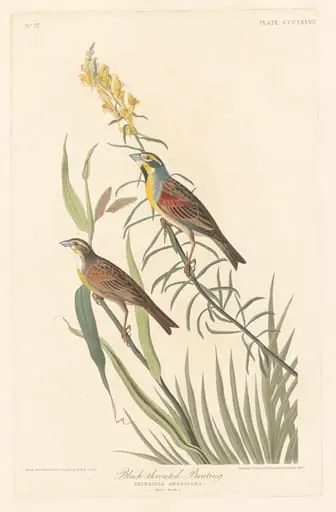
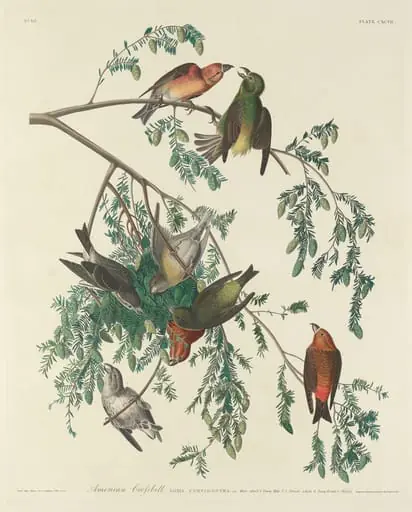
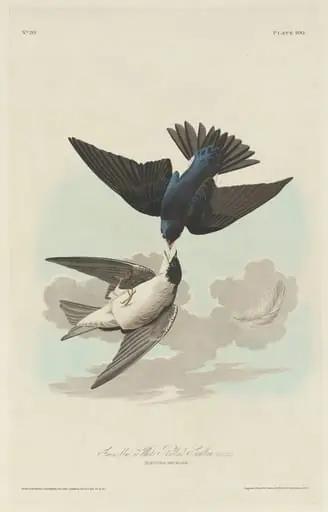
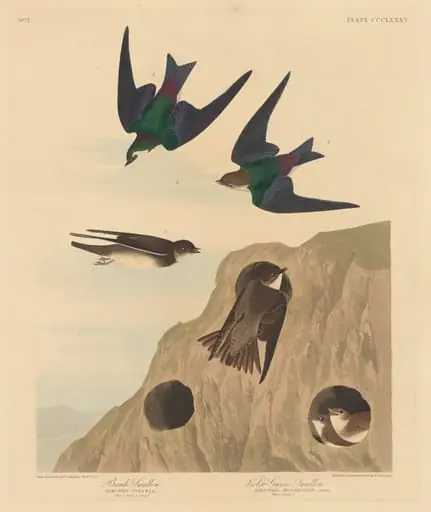
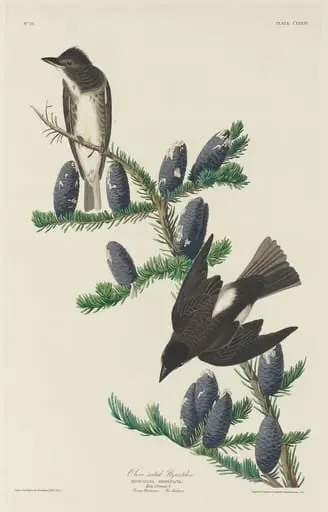
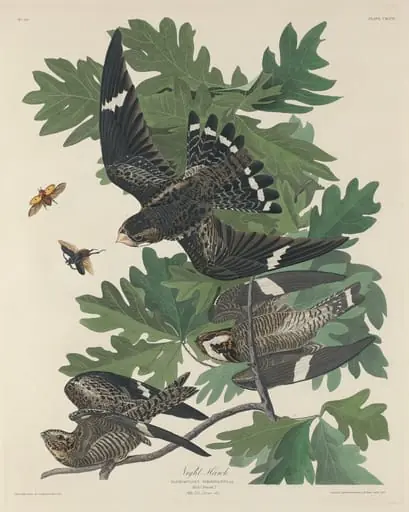
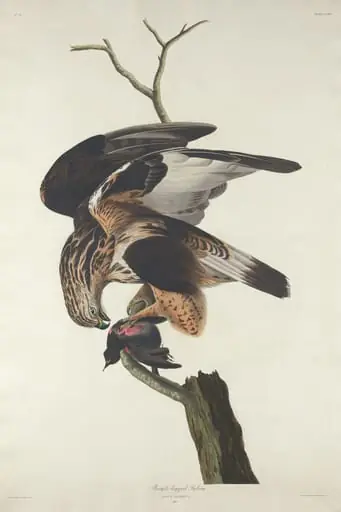
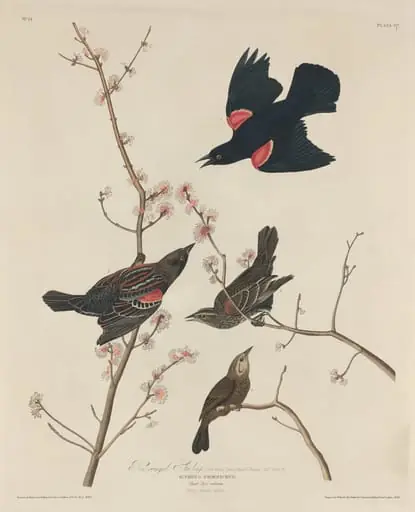
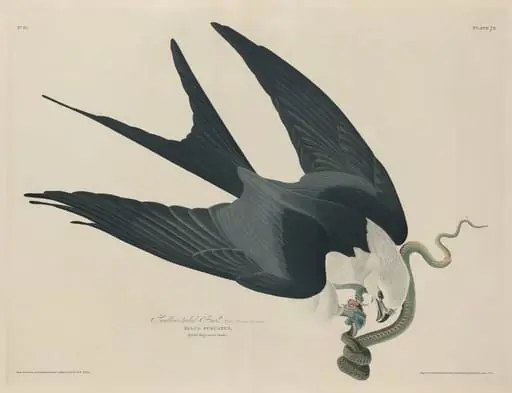
American Swift is an ink print by the Romanticist artist Robert Havell Jr.. It dates from 1833 and is held in the collection of the National Gallery of Art.
About this work
Overview
It belongs to a series of ornithological prints produced during a period of growing interest in natural history illustration.
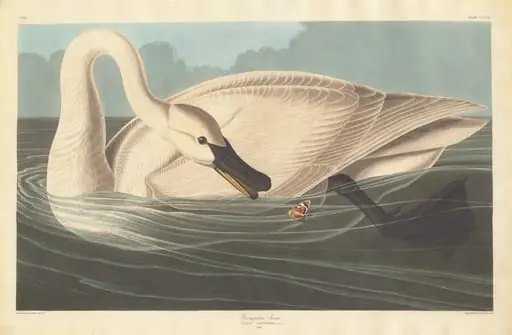
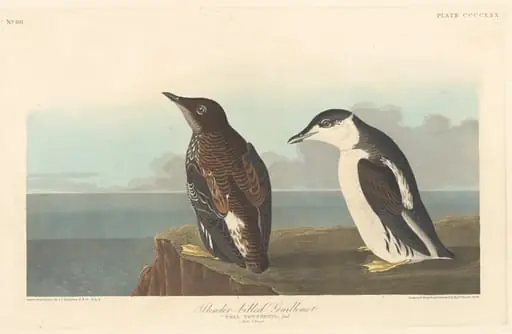
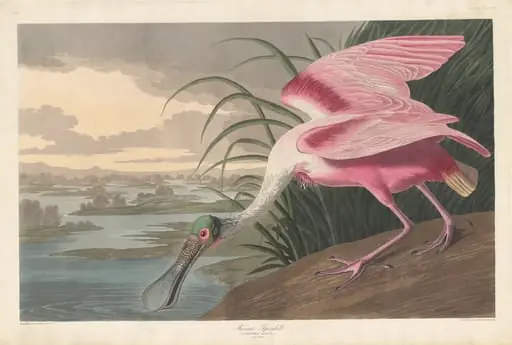
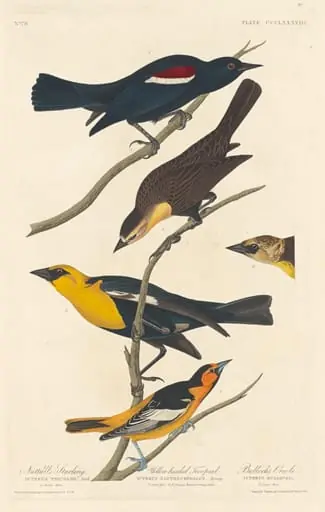
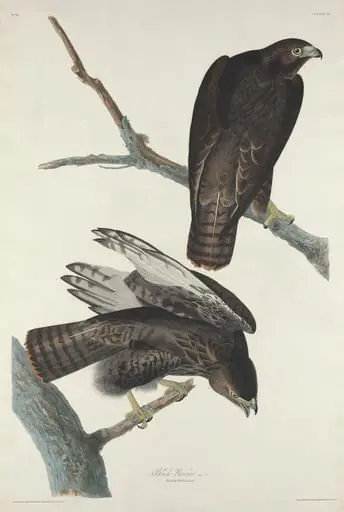
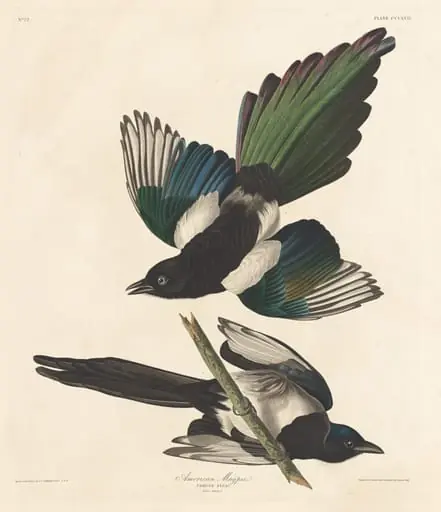
Created in 1833, *American Swift* is a hand-colored engraving and aquatint on Whatman wove paper by Robert Havell Jr. It belongs to a series of ornithological prints produced during a period of growing interest in natural history illustration. Havell, trained in his family’s printmaking tradition, employed precise engraving and subtle aquatint washes to render biological detail with scientific clarity and aesthetic restraint.
Subject & Meaning
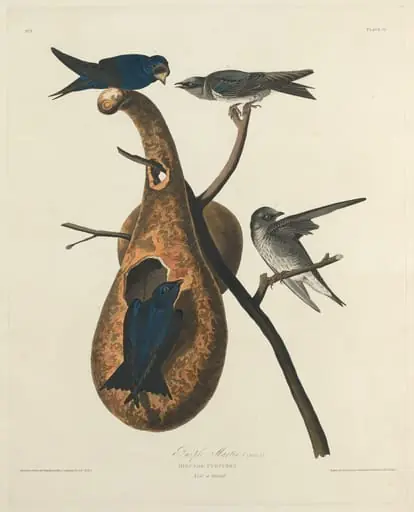
The print depicts two swift birds in flight, wings fully extended, against a neutral background. Below, a loosely constructed nest of twigs and dried leaves, along with scattered feathers, suggests recent activity. The composition emphasizes motion and fragility, presenting the birds not as symbols but as observed natural entities. The absence of landscape or context directs attention to their anatomy and behavior, aligning with the era’s empirical approach to natural study.
Technique & Style
Havell used fine-line engraving to define individual feathers and wing structures, while aquatint provided soft tonal gradations in muted browns and blacks. Hand-coloring was applied delicately to enhance form without overwhelming detail. The Whatman paper’s smooth texture supported the precision of the lines and allowed for even ink absorption. The result is a restrained, almost scientific rendering, where texture and movement are conveyed through controlled mark-making rather than dramatic contrast.
History & Provenance
Robert Havell Jr. was part of a multi-generational family of London-based printmakers known for their work in natural history illustration. He collaborated on John James Audubon’s *Birds of America*, contributing plates that combined technical rigor with observational fidelity. *American Swift* was likely produced during this period, reflecting the Havell workshop’s role in disseminating American wildlife imagery to European audiences through high-quality reproductive prints.
Context
In the early 19th century, detailed ornithological prints were valued both as scientific records and as objects of public fascination. The Havell family’s work intersected with broader trends in natural philosophy and colonial documentation. While European audiences sought accurate depictions of New World species, artists like Havell balanced aesthetic refinement with fidelity to specimen observation, contributing to a transatlantic exchange of visual knowledge.
Legacy
Havell’s prints, including *American Swift*, remain significant for their technical precision and contribution to the visual record of North American birds. Though overshadowed in popular memory by Audubon’s larger projects, Havell’s smaller-scale works exemplify the quiet diligence of 19th-century natural history illustration. His approach influenced later generations of scientific illustrators who prioritized clarity and anatomical accuracy over theatrical presentation.
Artist & collection

Artist
The Havell family of Reading, Berkshire, England, included a number of notable engravers, etchers and painters, as well as writers, publishers, educators, and musicians.