Artwork
東洲斎写楽画 初世中島和田右衛門のぼうだら長左衛門と初世中村此蔵の船宿かな川やの権 『敵討乗合話』|Nakajima Wadaemon and Nakamura Konozō as Bōdara no Chōzaemon and Kanagawaya no Gon in the Play "Katakiuchi noriyaibanashi"
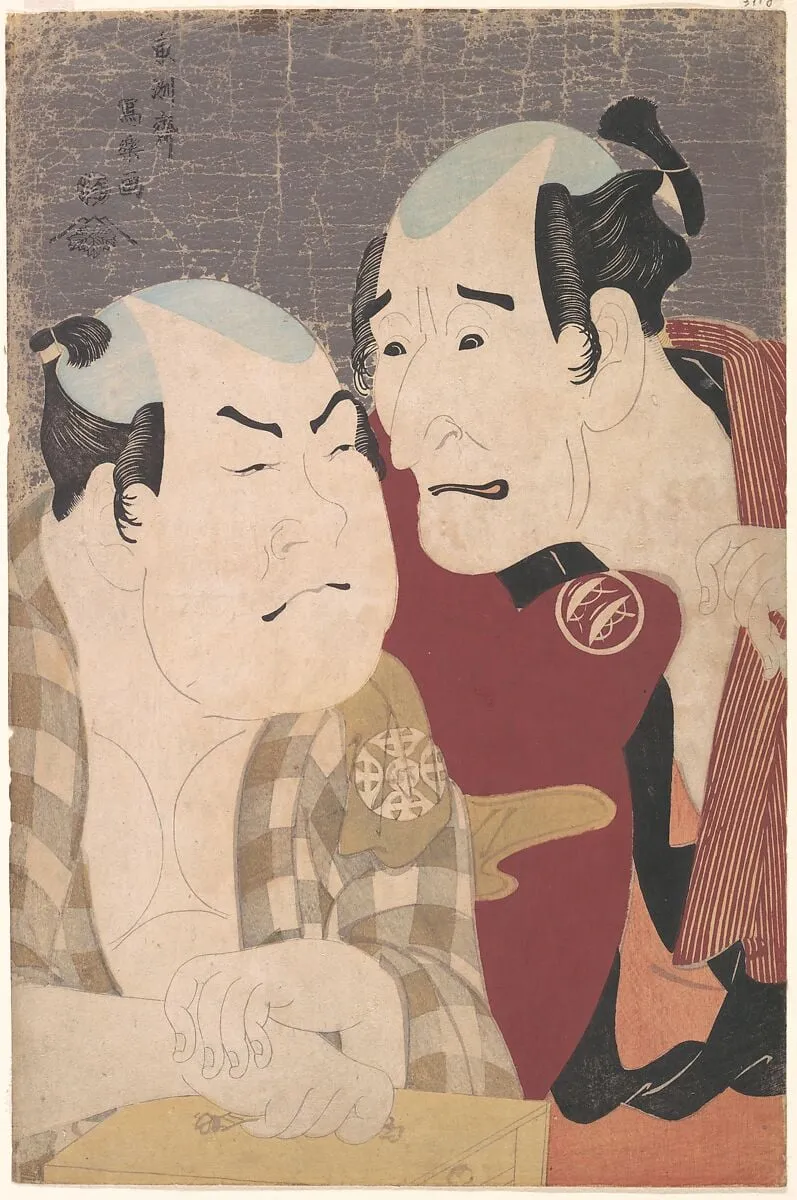
東洲斎写楽画 初世中島和田右衛門のぼうだら長左衛門と初世中村此蔵の船宿かな川やの権 『敵討乗合話』|Nakajima Wadaemon and Nakamura Konozō as Bōdara no Chōzaemon and Kanagawaya no Gon in the Play "Katakiuchi noriyaibanashi" is an ink print by the Romanticist artist Tōshū. It dates from 1794 and is held in the collection of the British Museum.
About this work
The white mica background makes the colors glow, like stage lights catching silk.
You see two actors in full stage makeup and dramatic poses. One clutches a sword, the other grips a fan. Their faces are exaggerated—big eyes, sharp noses, tense mouths.
This print was made in just ten months in 1794. Sharaku vanished after that, leaving no other works. The white mica background makes the colors glow, like stage lights catching silk.
Look up *ukiyo-e* to see more prints of actors and daily life from this time.
Overview
This woodblock print, dated 1794, is a portrait of two actors by Tōshūsai Sharaku. It features Nakajima Wadaemon as Bōdara no Chōzaemon and Nakamura Konozō as Kanagawaya no Gon from the play "Katakiuchi noriyaibanashi".
Subject & Meaning
The print captures the dramatic intensity of the two actors in full stage makeup. Exaggerated facial features—large eyes, sharp noses, and tense mouths—convey the emotional depth of their characters. One figure clutches a sword, while the other grips a fan, highlighting the contrast between aggression and restraint.
Technique & Style
Executed in ink, color, and white mica on paper, the print utilizes the white mica background to create a luminous effect, evoking the glow of stage lights on silk fabrics. This technique is characteristic of ukiyo-e prints, which often depicted actors and daily life scenes.
History & Provenance
Noted for its rapid production within a ten-month period in 1794, this print marks the culmination of Sharaku’s known output. Following its creation, the artist ceased production, leaving behind no subsequent works.
Context
Part of the ukiyo-e tradition, this print reflects the popularity of actor portraits in 18th-century Japan. For similar works, see other ukiyo-e prints focusing on theatrical and everyday life themes.
Artist & collection


 Untitled
 Untitled
 Untitled
 Untitled
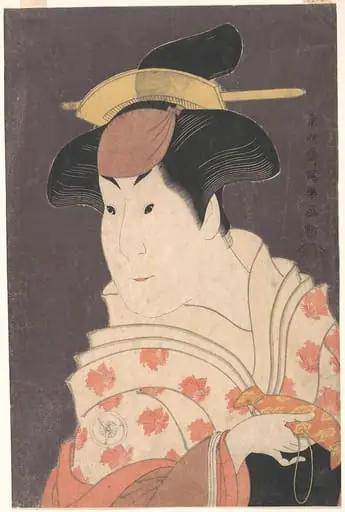 東洲斎写楽画 四代岩井半四郎の重の井 『恋女房染分手綱』|Iwai Hanshirō IV as Shigenoi in the Play "Koinyōbō Somewake Tazuna"
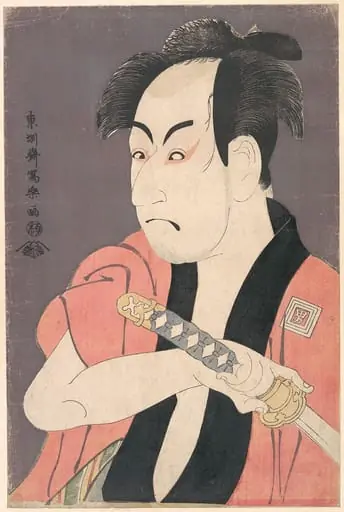 東洲斎写楽画 初代市川男女蔵の奴一平 『恋女房染分手綱』|Ichikawa Omezō I in the Role of Yakko Ippei from the Play "Koinyōbō somewake tazuna"
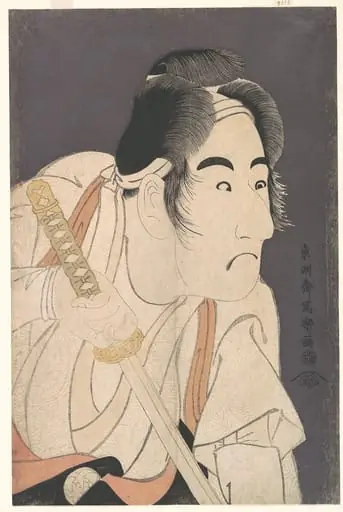 東洲斎写楽画 二世坂東三津五郎の石井源蔵 『花菖蒲文禄曽我』|Bandō Mitsugorō II as Ishii Genzō in the Play "Hana-ayame Bunroku Soga"
 Untitled
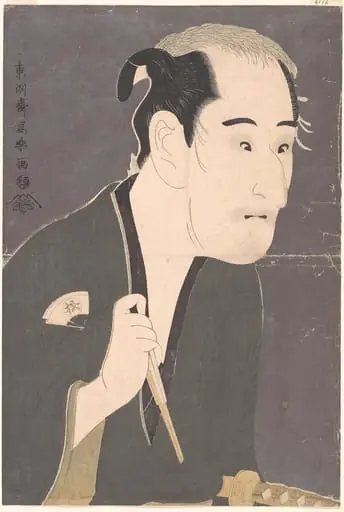 東洲斎写楽画 尾上松助の松下酒之進 『敵討乗合話』|Onoe Matsusuke I as Matsushita Mikinojō in the Play "Katakiuchi noriyaibanashi"
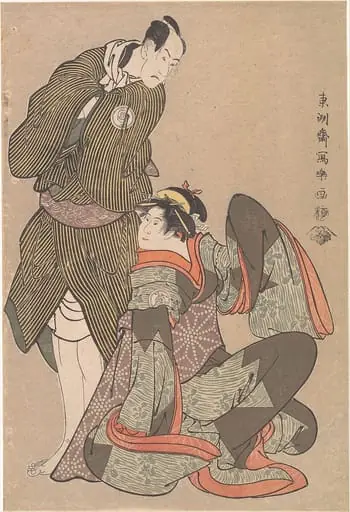 東洲斎写楽画 三代目坂東彦三郎の帯屋長右衛門と四代目岩井半四郎の信濃 屋お半 『二本松陸奥生長』|Bandō Hikosaburō III in the Role of Obiya Chōemon and Iwai Hanshiro IV in the Role of Shinanoya Ohan, from the Play “Nihonmatsu Michinoku sodachi”
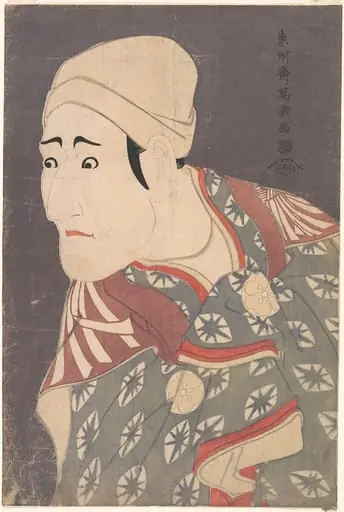 八代目守田勘弥の鴬の次郎作|Kabuki Actor Morita Kan’ya VIII as the Palanquin-Bearer in the Play A Medley of Tales of Revenge (Katakiuchi noriaibanashi)
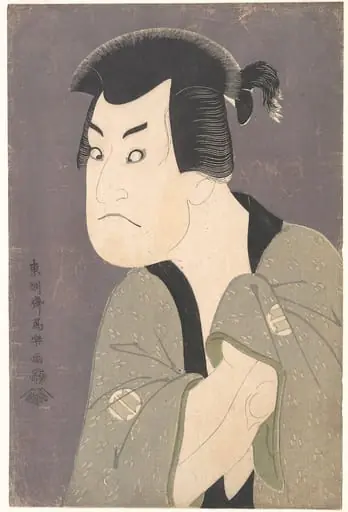 東洲斎写楽画 三世坂田半五郎の藤川水右衛門 『花菖蒲文禄曽我』|Sakata Hangorō III as Fujikawa Mizuemon in the Play "Hana Ayame Bunroku Soga"
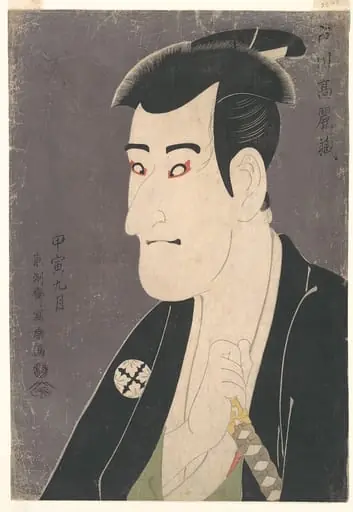 三代目市川高麗蔵の志賀大七|Kabuki Actor Ichikawa Komazō III as Shiga Daishichi in the Play A Medley of Tales of Revenge (Katakiuchi noriaibanashi)
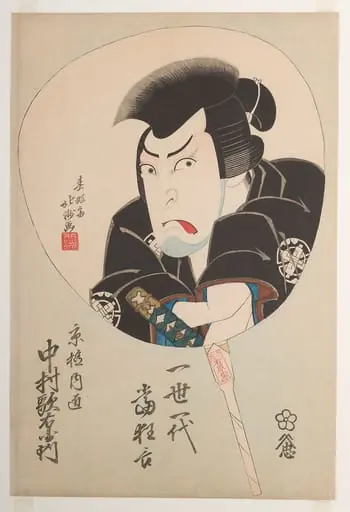 春好斎北洲画 三代目中村歌右衛門 『一世一代当狂言』|Kabuki Actor Nakamura Utaemon III as the Sword Master Kyōgoku Takumi, from the series Issei ichidai atari Kyōgen (Hits of a Lifetime of Kyōgen)
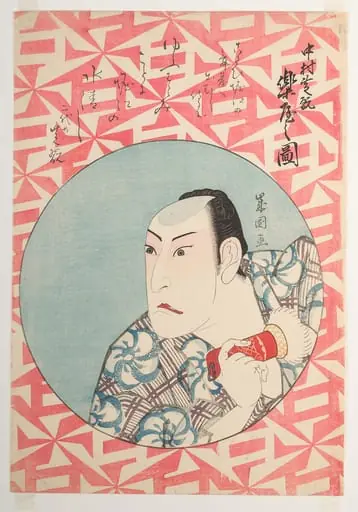 壽陽堂歳国画 『中村芝翫 楽屋之図』|Kabuki Actor Nakamura Shikan Backstage (Nakamura Shikan rakuya no zu)
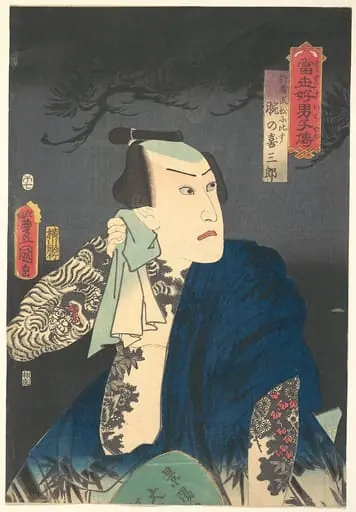 「当世好男子伝」松 「行者武松に比す腕の喜三郎」 初代河原崎権十郎|The Actor Kawarazaki Gonjūrō I as Ude no Kisaburō, likened to Wu Song the Ascetic (Gyōja Bushō ni hisu), from the “Pine” triptych of the series A Modern Water Margin (Tōsei suikoden)
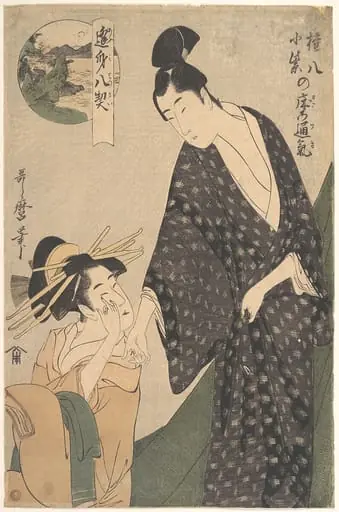 逢身八契 権八小紫の床の通気|Gonpachi ni Komurasaki no Toko no Tsuki