Artwork
The Prima Macchina for the Chinea of 1759: A Fortress
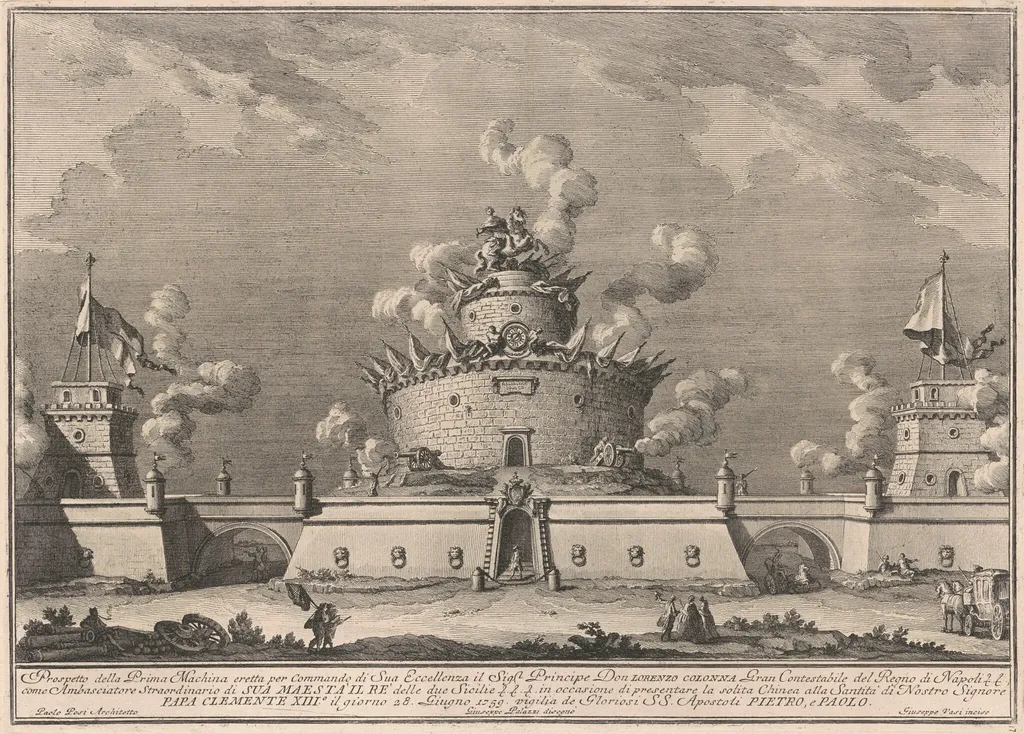
The Prima Macchina for the Chinea of 1759: A Fortress is an ink print by the Romanticist artist Giuseppe Vasi. It dates from 1759 and is held in the collection of the National Gallery of Art.
About this work
Overview
The work belongs to a series of prints Vasi produced to record civic rituals, blending topographical accuracy with symbolic form.
Created in 1759 by Giuseppe Vasi, this etching documents the ceremonial apparatus known as the Prima Macchina, constructed for the annual Chinea procession in Rome. It depicts a temporary architectural structure resembling a fortress, designed to convey authority and spectacle. The work belongs to a series of prints Vasi produced to record civic rituals, blending topographical accuracy with symbolic form.
Subject & Meaning
The central tower, crowned with a clock and flanked by arched walls, represents a symbolic fortress erected to honor the Pope during the Chinea ceremony. The presence of figures, horses, and cannons suggests a military escort and ceremonial guard, reinforcing the event’s political and religious gravity. Rising smoke implies pyrotechnics or ritual fires, common in such processions to mark sacred occasions.
Technique & Style
Vasi employed fine-line etching to render intricate architectural details—flags, battlements, and cannon barrels—with precision. The composition is tightly controlled, emphasizing symmetry and verticality to amplify the structure’s monumentality. Atmospheric depth is suggested through subtle tonal gradations, while the density of figures adds narrative texture without overwhelming the central form.
History & Provenance
The print was made as part of Vasi’s broader documentation of Roman ceremonies and urban landmarks during the mid-18th century. Likely commissioned or circulated among Roman elites, it served both as a record and a souvenir of the Chinea, an event tied to tribute payments to the Papacy. Surviving impressions are held in institutional collections, including the Vatican and the British Museum.
Context
The Chinea procession, held each June, originated as a feudal tribute from the Kingdom of Naples to the Pope, evolving into a grand public spectacle. Vasi’s etchings captured these events as Rome transitioned from Baroque ceremonialism toward Enlightenment-era documentation. His work reflects a growing interest in preserving ephemeral rituals through print, aligning with contemporary antiquarian practices.
Legacy
Vasi’s prints, including this one, became reference points for later topographers and historians of Roman ceremonial life. Though the temporary structure was dismantled after the event, the etching preserved its form and context for posterity. His method of combining architectural precision with social detail influenced subsequent generations of view-makers in Italy and beyond.
Artist & collection

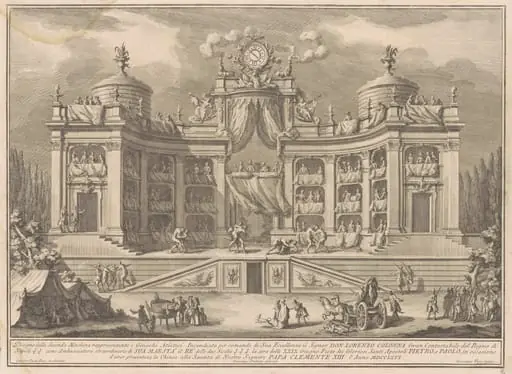 The Seconda Macchina for the Chinea of 1766: A Theater for Athletic Games
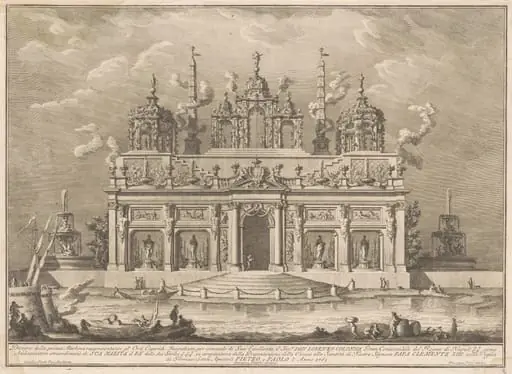 The Prima Macchina for the Chinea of 1765: The Garden of the Hesperides
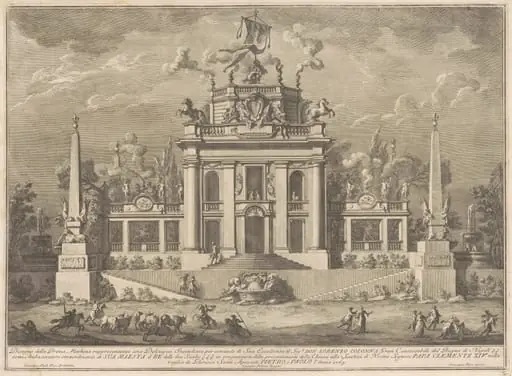 The Prima Macchina for the Chinea of 1769: A "Deliziosa"
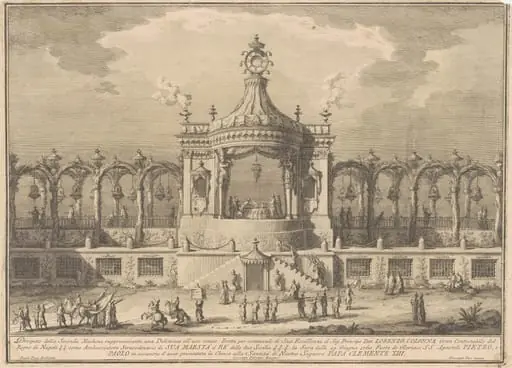 The Seconda Macchina for the Chinea of 1760: A Chinoiserie Pavilion
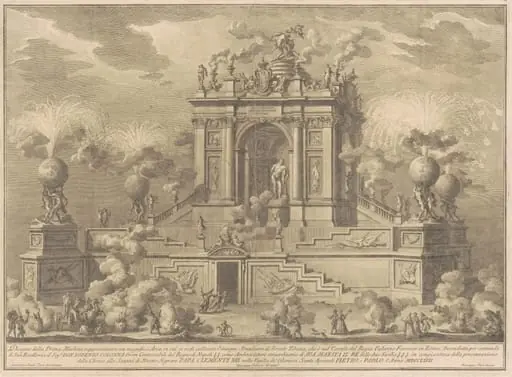 The Prima Macchina for the Chinea of 1767: A Triumphal Arch with the Farnese Hercules
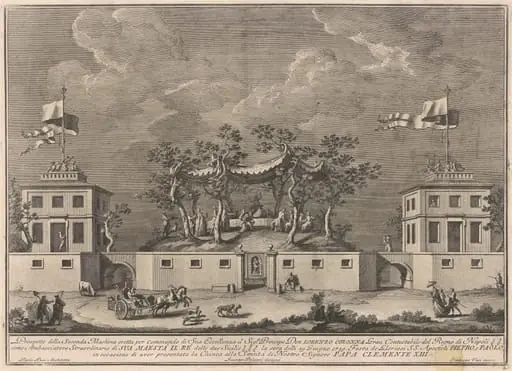 The Seconda Macchina for the Chinea of 1759: A "Deliziosa" with a Bacchanal
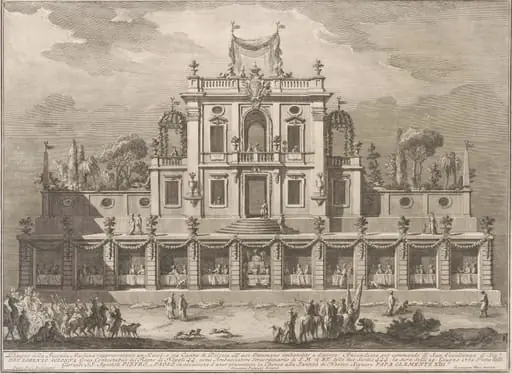 The Seconda Macchina for the Chinea of 1762: A Kiosk, or Pleasure-House in Ottoman Style
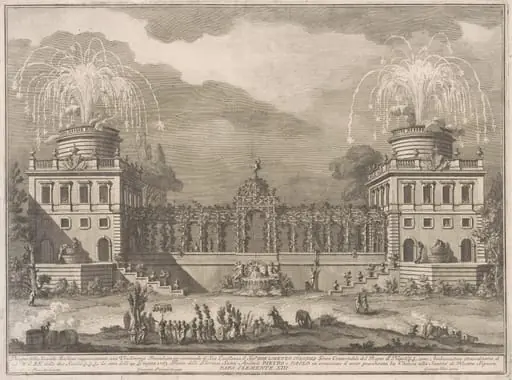 The Seconda Macchina for the Chinea of 1763: The Grape Harvest
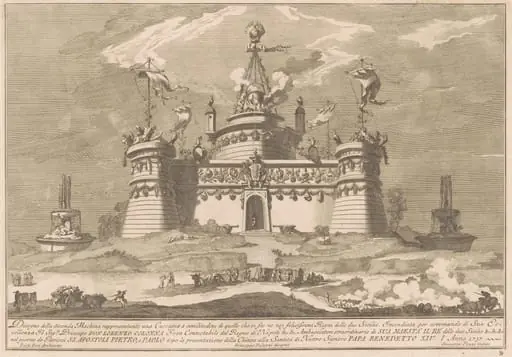 The Seconda Macchina for the Chinea of 1757: The Fortress of Cockaigne
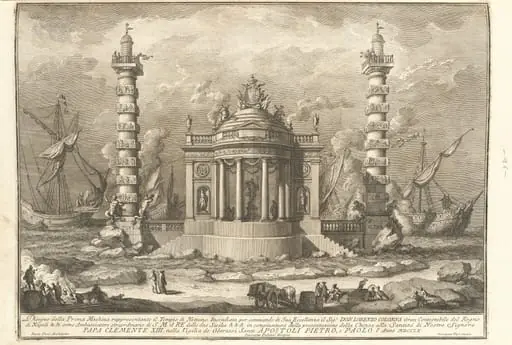 The Prima Macchina for the Chinea of 1760: The Temple of Neptune
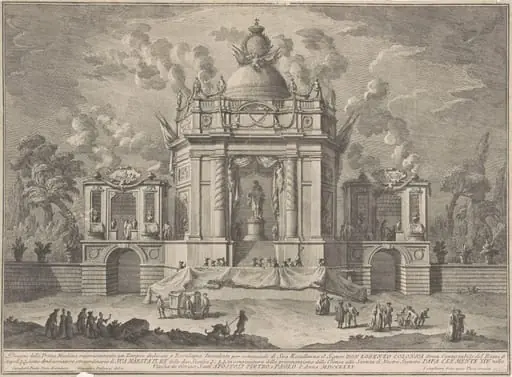 The Prima Macchina for the Chinea of 1771: The Temple of Asclepius
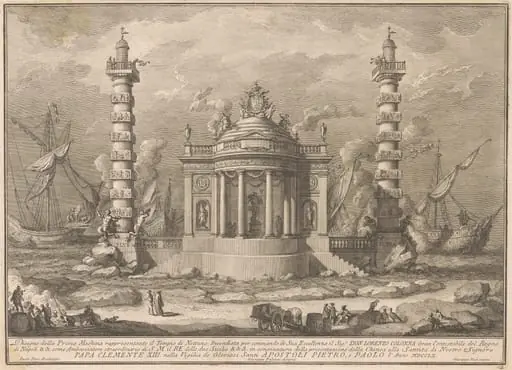 The Prima Macchina for the Chinea of 1760: The Temple of Neptune
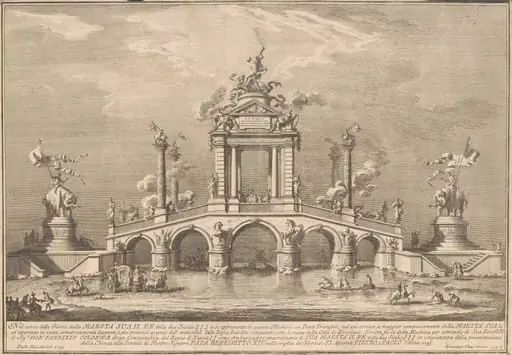 The Prima Macchina for the Chinea of 1755: A Triumphal Bridge with Antiquities from Herculaneum
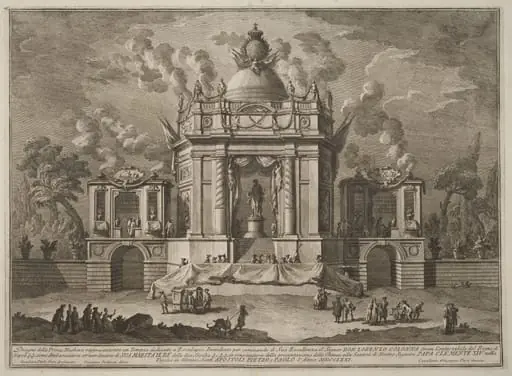 The Prima Macchina for the Chinea of 1771: The Temple of Asclepius
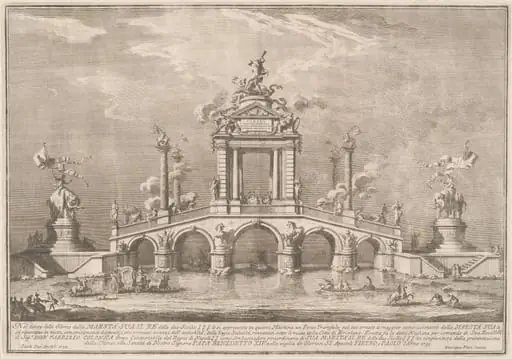 The Prima Macchina for the Chinea of 1755: A Triumphal Bridge with Antiquities from Herculaneum
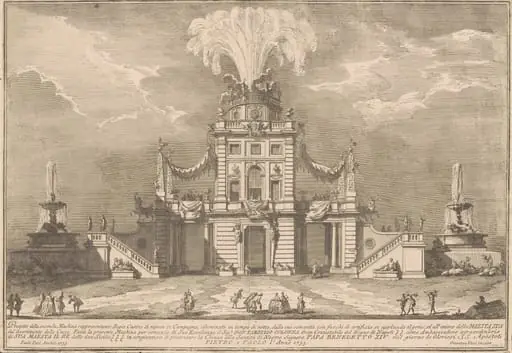 The Seconda Macchina for the Chinea of 1755: A Royal Hunting Lodge
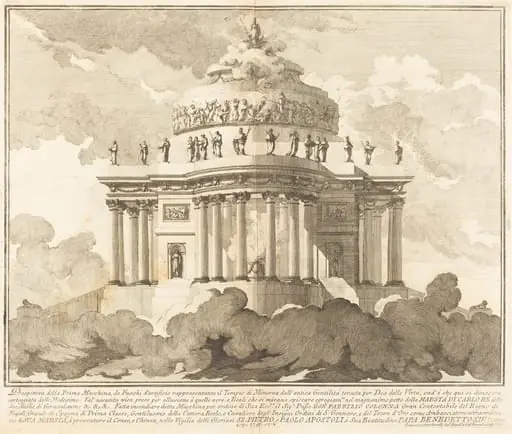 The Prima Macchina for the Chinea of 1746: The Temple of Minerva
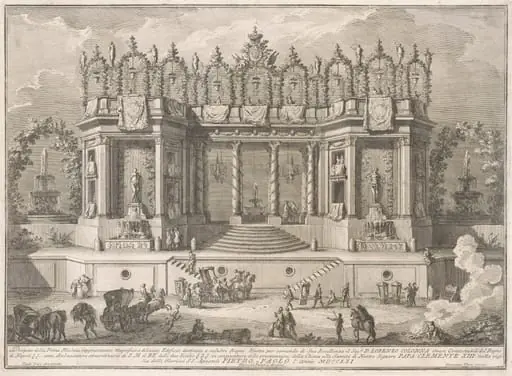 The Prima Macchina for the Chinea of 1761: The Salubrious Baths